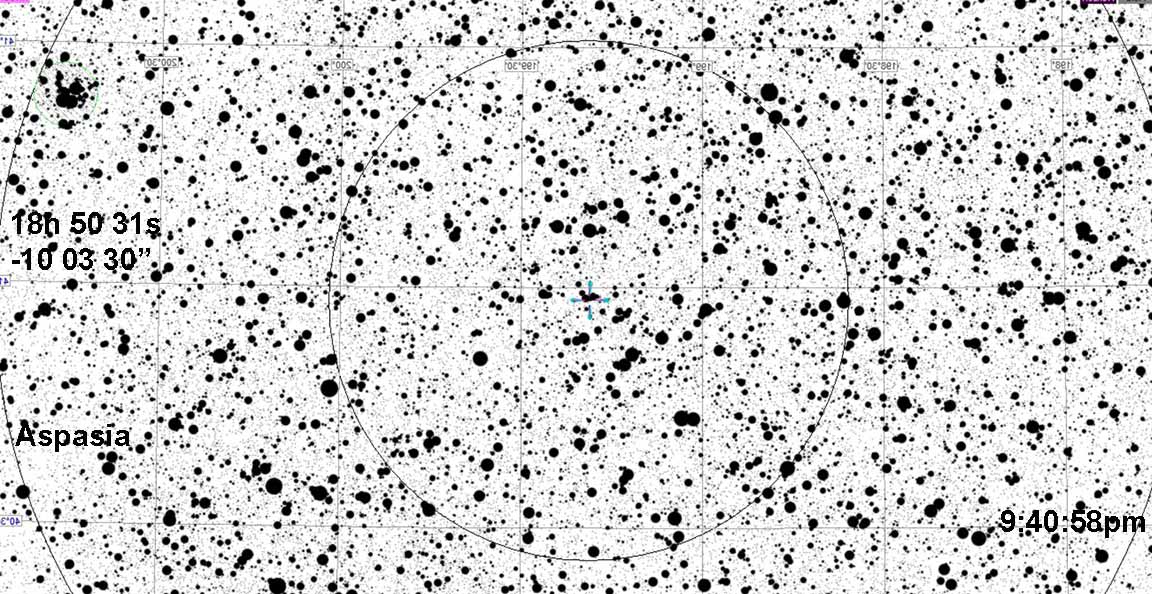
This is a good occultation to search for moons, given the unusually long 21s duration. Even a moon only 5% of the size of the primary, should produce a solid detection. There are several other observers in CA and Az who are signed up for this one, so any moon may have a good chance to be confirmed. The drop is only 0.4 magnitudes, however, but this should be detectable with just a few integration data points even at 4x setting. I think 2x may give good enough S/N if skies stay dry.
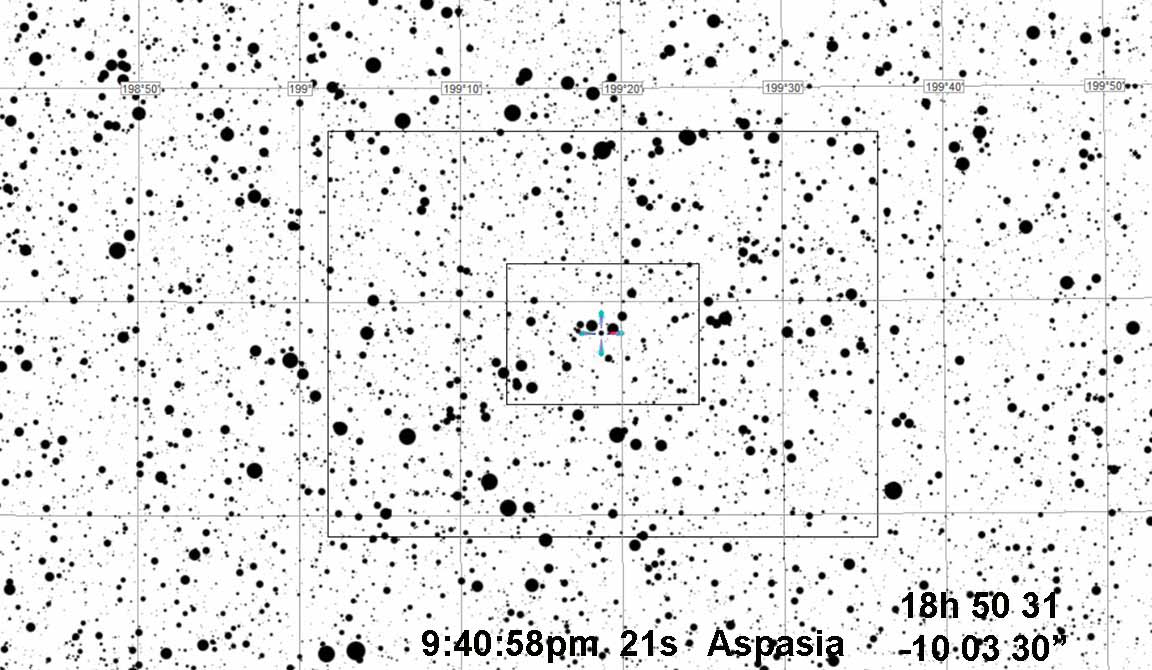
The target star is W=12.7, and Aspasia is about V=12.2. So the target should drop from a combined magnitude of 11.67 to 12.2 by those numbers. However, OWc says the drop will be only 0.4 magnitudes, about the same in V and in R (the W bandpass is between V and R so about 0.40 magnitude drop should be assumed). So, taking the average os the two, about 0.5 magnitudes of drop is expected. At 11.67, we ought to be able to get a good signal at 2x. 2x would be good enough to give a good enough signal to detect even a very small moonlet. Go with 4x if that seems best with your judgment. Note that because the asteroid is brighter than the star, that the target image in the maps below is fainter than what you'll see in the telescope.
Alt=39, Az=209 in Scutum, just a degree or so away from open cluster M26. You can see it in the chart below in the upper left corner of the eyepiece circle. . If you want to see how accurate your C2A telescop;e pointing is, send it to M26 and see where it is in the field of view, then then to the target and the offset should be similar.
|
|
|
|
Karl had trouble getting the field ID'd and ran out of time in the search. No data. Just Kirk and me, it seems.
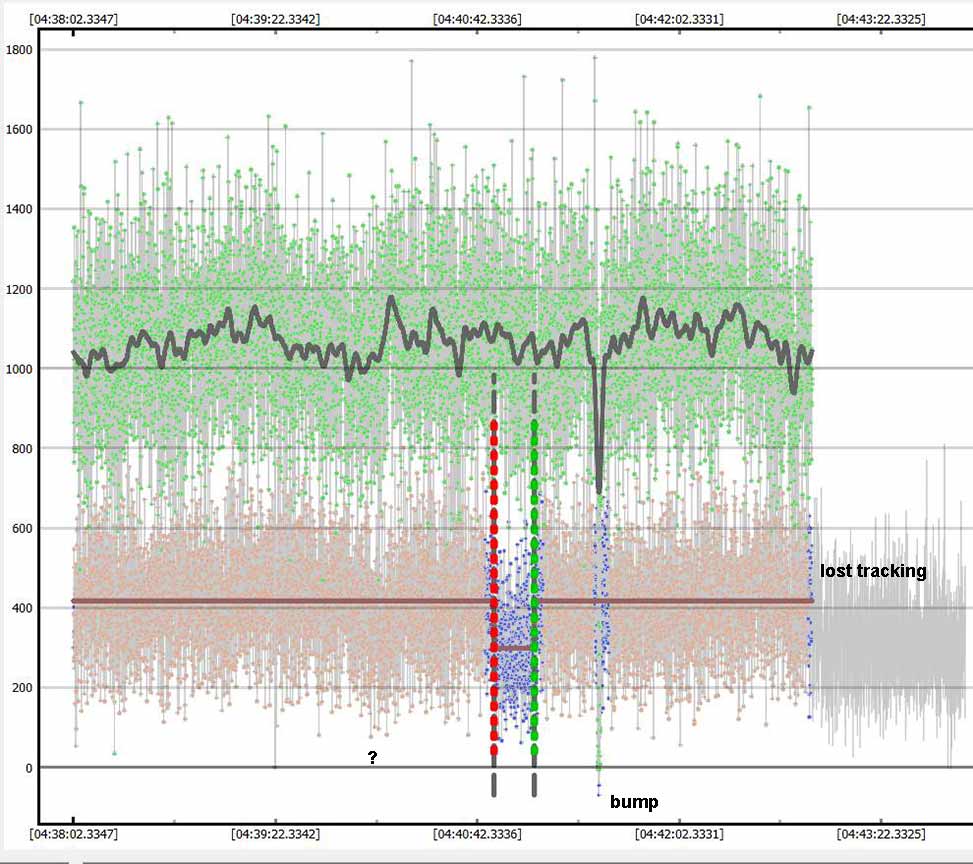
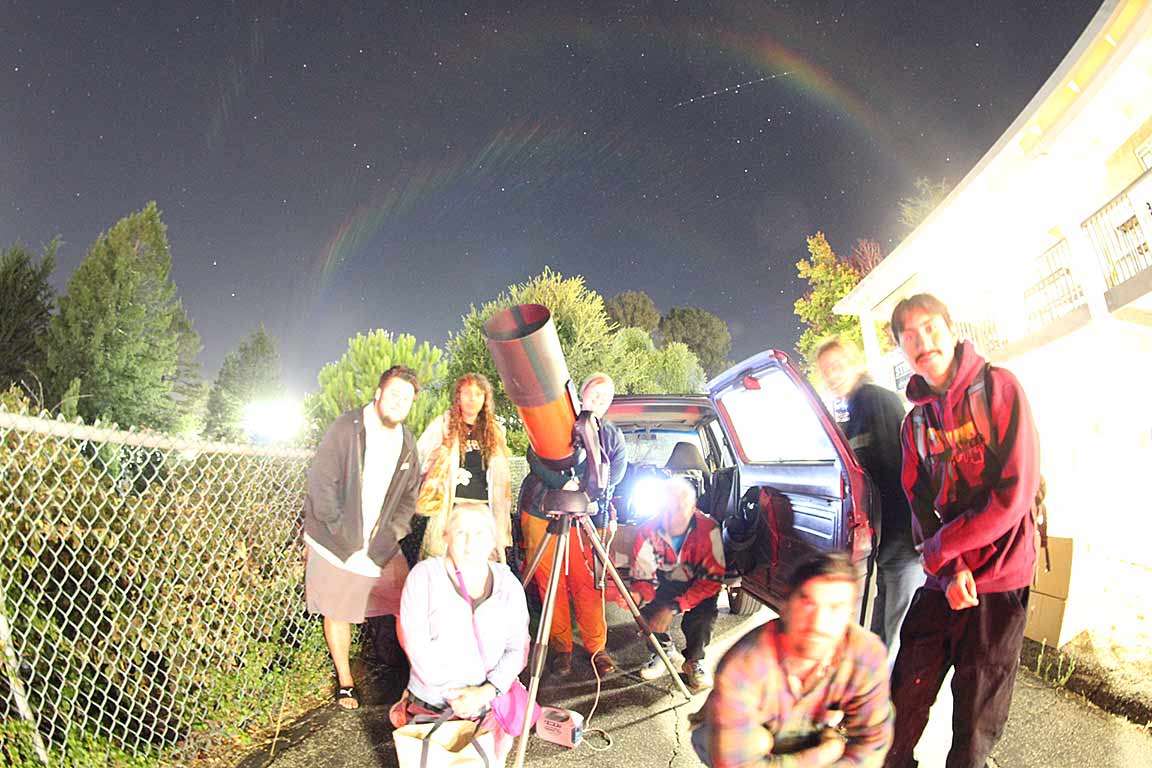
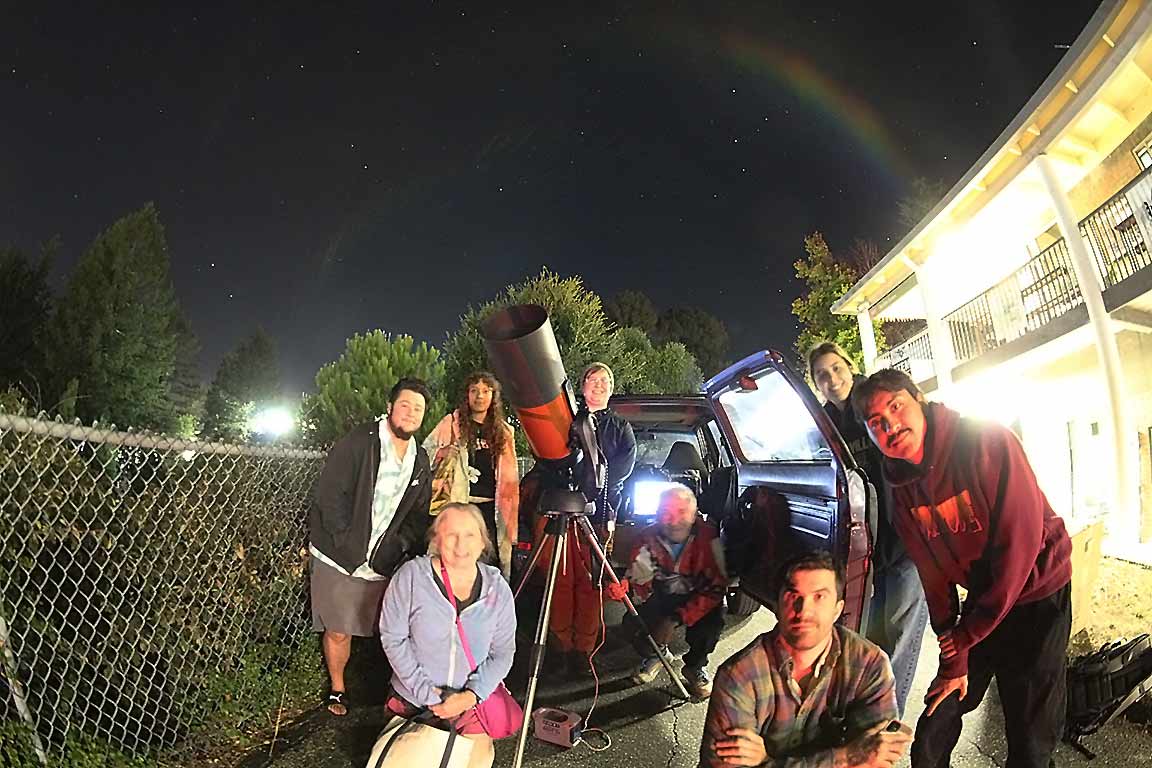
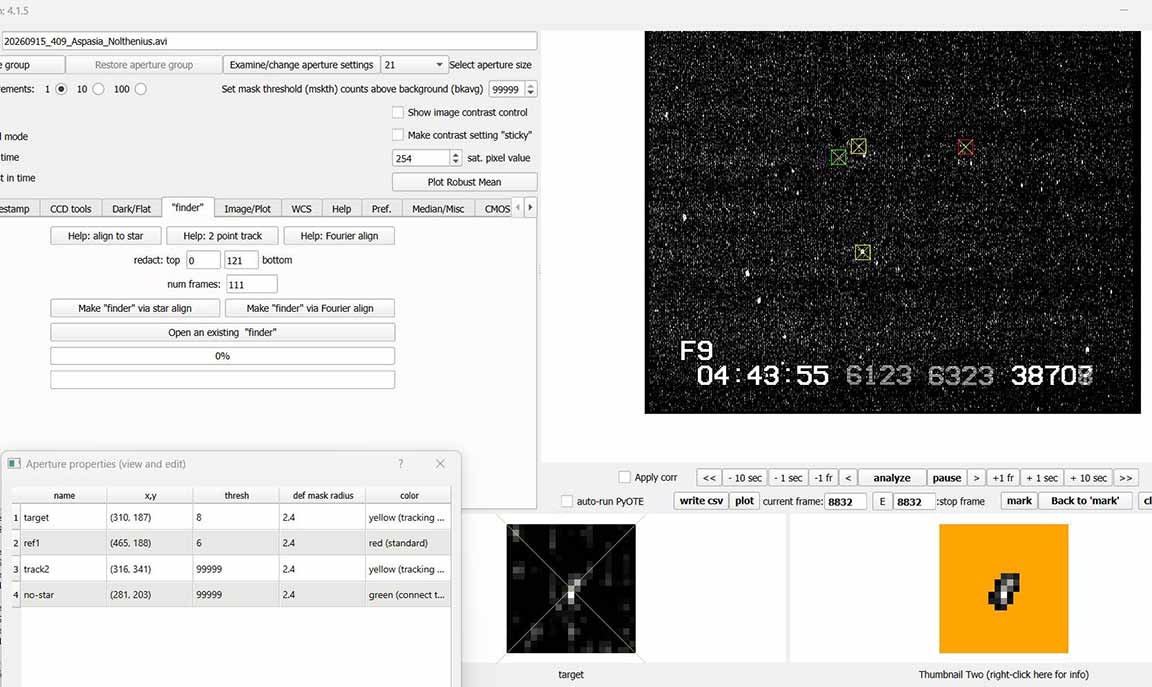
I got a 6 minute long recording with 7 students outside room 806 at Cabrillo, after class Astro 3-2 ended. Skies were clear and good. The dip in magnitude was visible, but not as high as I thought it might, at 2x. Looked visually live like a weak positive about 15-20s long I'd guess. I commented live when I saw the star dip and return.
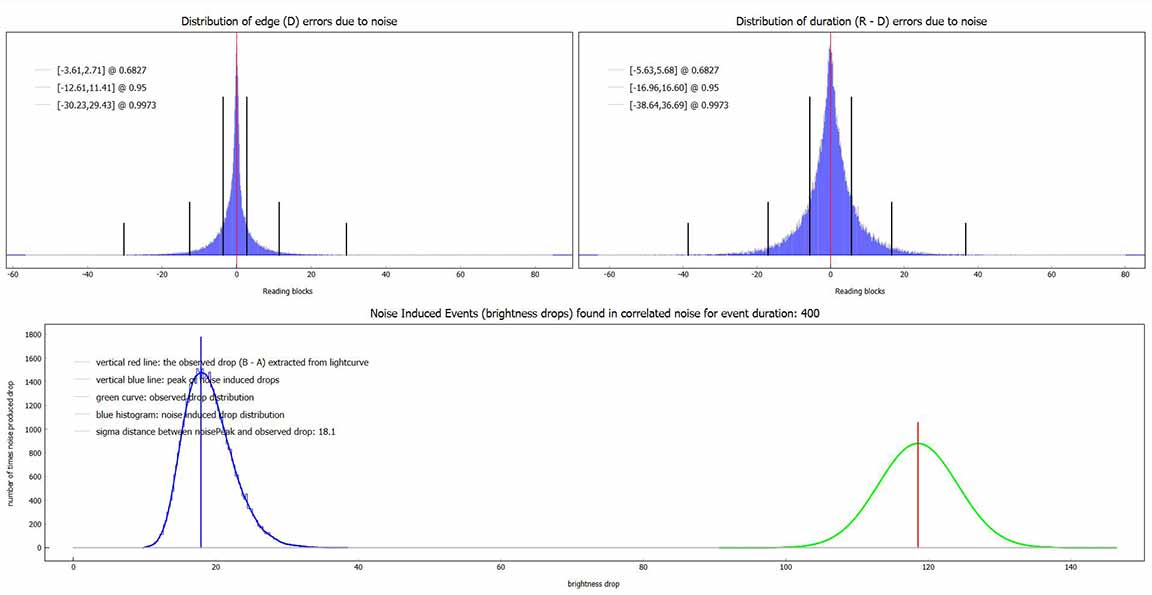
NIE test: 18.1 sigma
magDrop report: percentDrop: 28.4 magDrop: 0.363 +/- 0.040 (0.95 ci)
DNR: 0.93
D time: [04:40:48.8936]
D: 0.6800 containment intervals: {+/- 0.1265} seconds
D: 0.9500 containment intervals: {+/- 0.4803} seconds
D: 0.9973 containment intervals: {+/- 1.1931} seconds
R time: [04:41:04.8935]
R: 0.6800 containment intervals: {+/- 0.1265} seconds
R: 0.9500 containment intervals: {+/- 0.4803} seconds
R: 0.9973 containment intervals: {+/- 1.1931} seconds
Duration (R - D): 15.9999 seconds
Duration: 0.6800 containment intervals: {+/- 0.2261} seconds
Duration: 0.9500 containment intervals: {+/- 0.6712} seconds
Duration: 0.9973 containment intervals: {+/- 1.5067} seconds
 |
 |
 |
 |
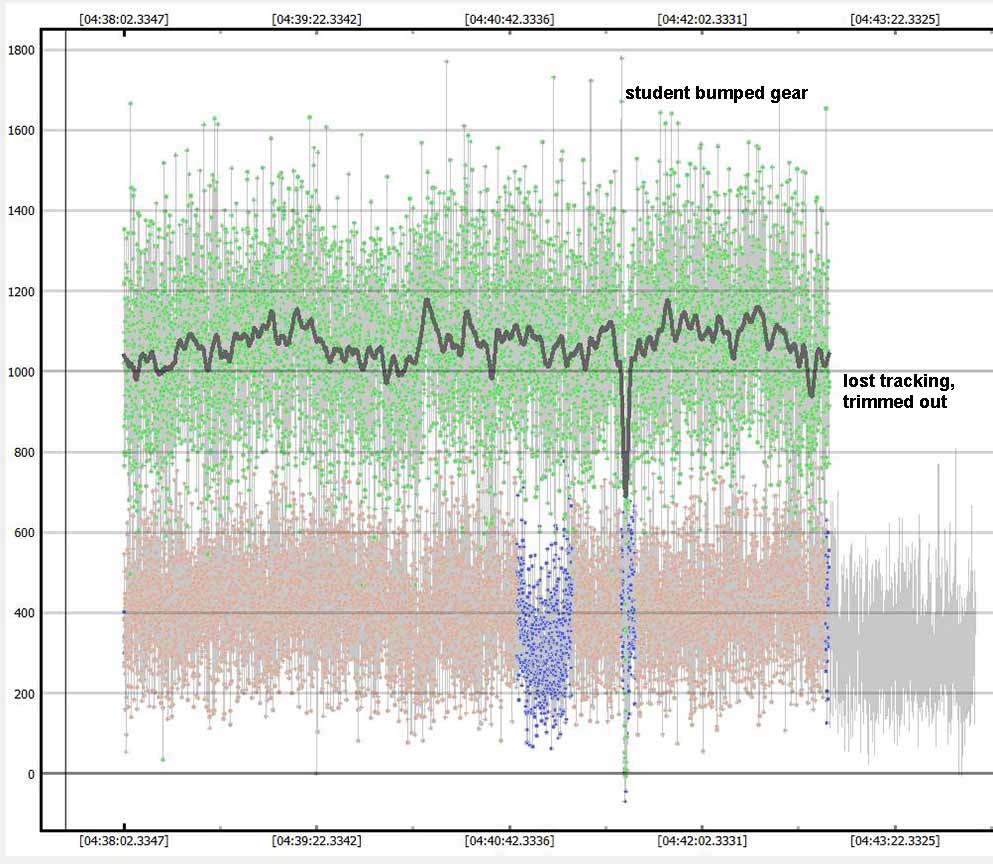 |
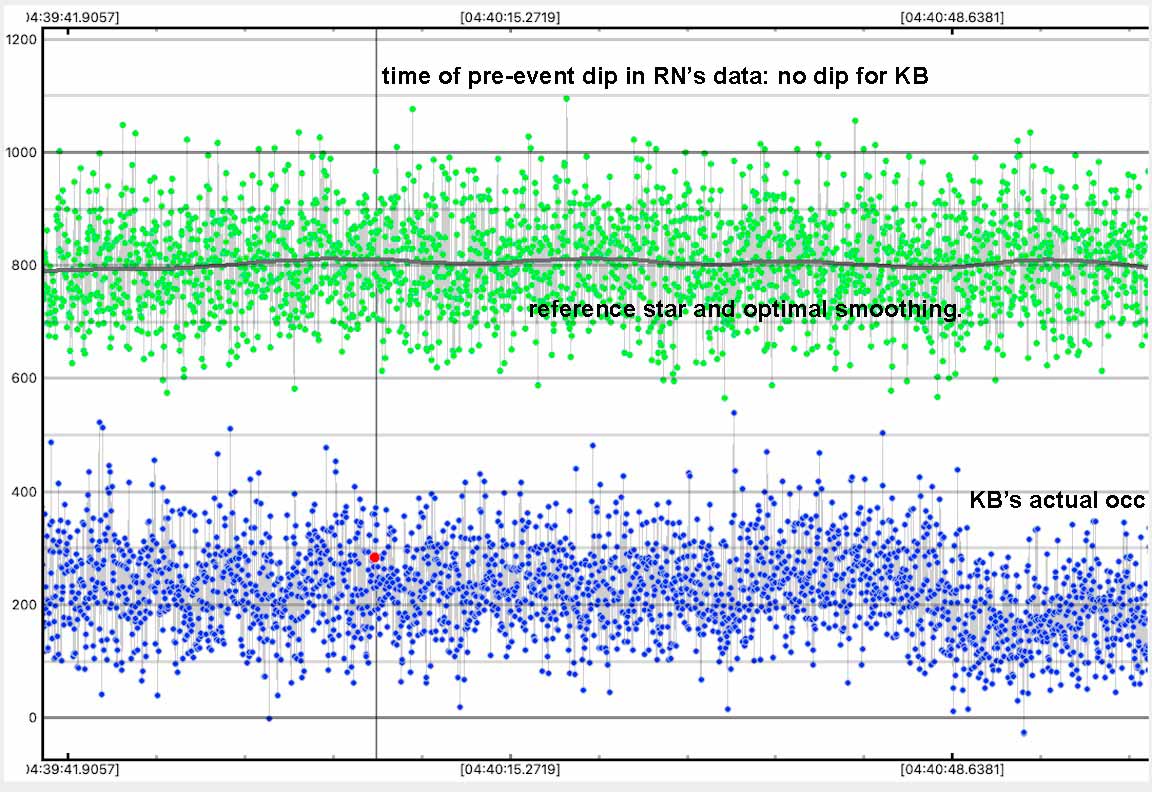
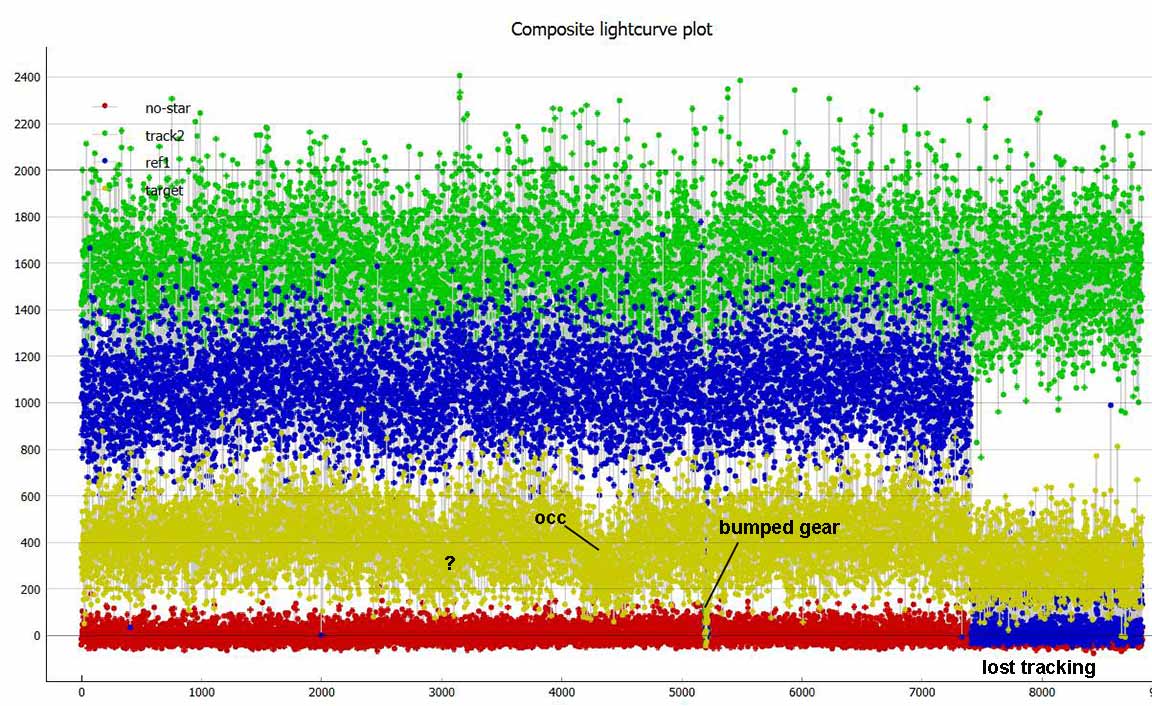
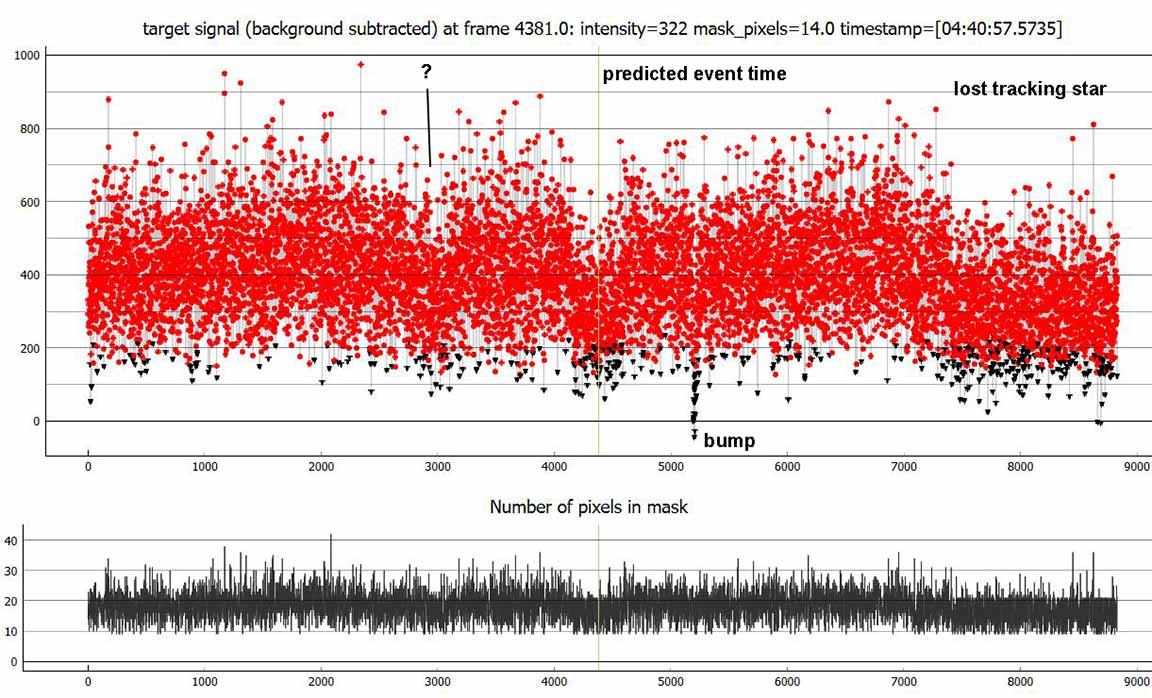
There is a secondary drop of similar amount (i.e. small) near 4:40:05 UT I've labelled with a question mark. I do not see a similar drop in Kirk Bender's light curve so I assume it might be noise and unsupportable as real. A ~3 second event there would correspond to a 3/20.5 x 278km = 41 km moonlet diameter, yet Kirk was only about 5 km south of my chord, so very unlikely he'd have a miss and I a ~3s event by a moonlet. |
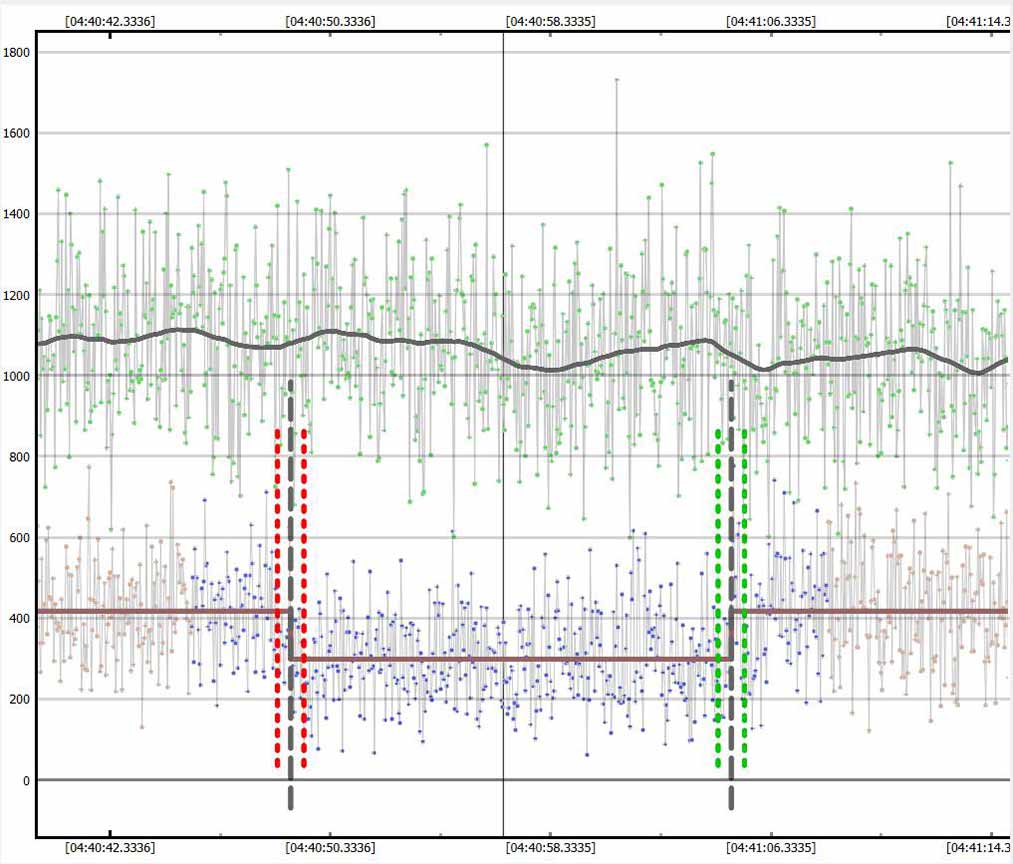 |
Despite the shallow drop in magnitude, and generally faint magnitude of the combined image, the long duration allows strong confirmation of the reality of the detection. 18.1 standard deviations away from being a noise-induced event from random alignment of noisey measurements of a constant star magnitudes. |
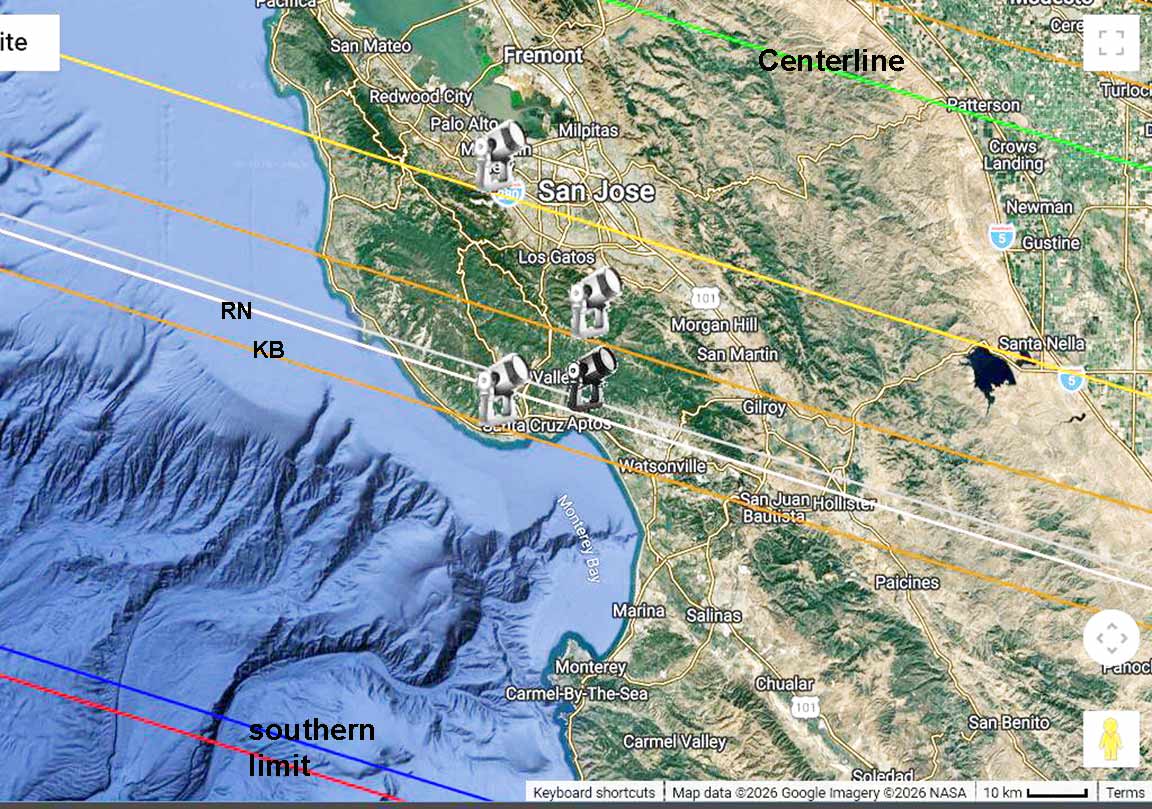
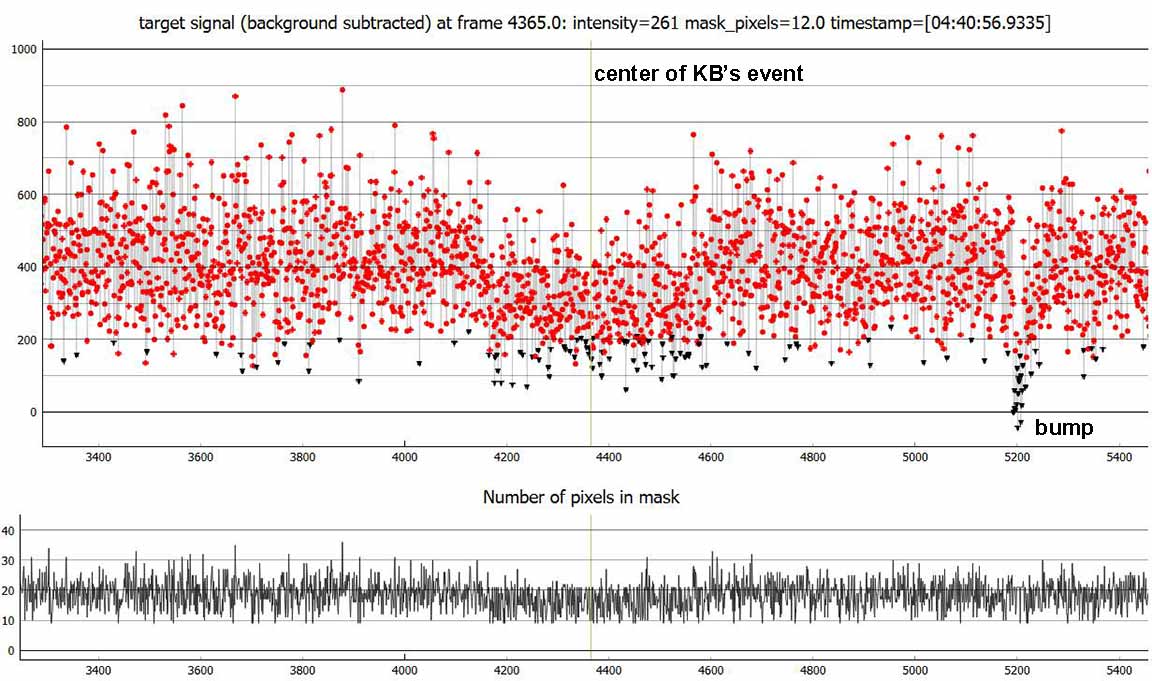
Kirk's and my chord tracks were only about 5km apart. |
Kirk's high quality data, with vertical line at the apparent dip in my light curve labelled with "?" as a possible secondary occultation. No dip in Kirk's data, seen here at higher spatial resolution than his data below, and confirming no dip. A moonlet with the inferred diameter from my dip would almost certainly have also been occulted for Kirk, and therefore his recording above gives good evidence my dip was noise. |
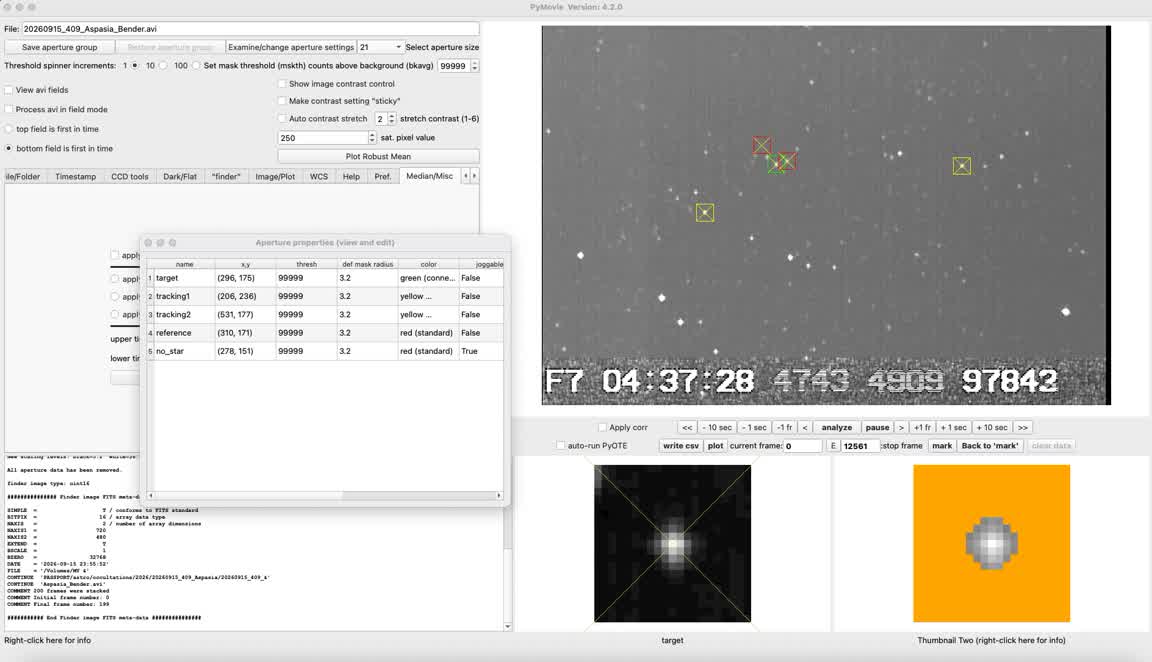
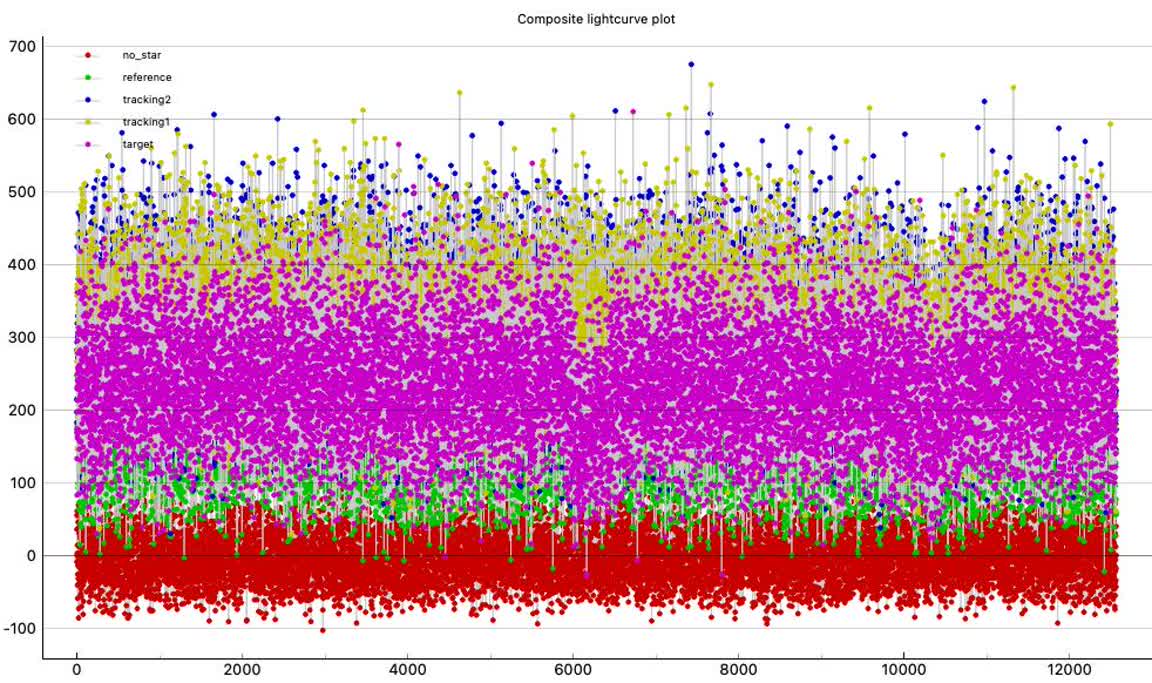
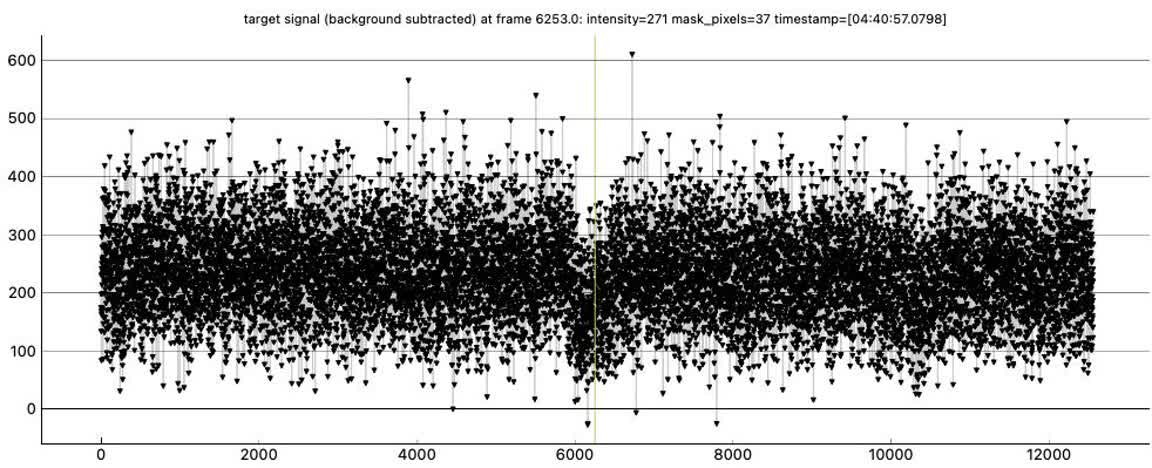
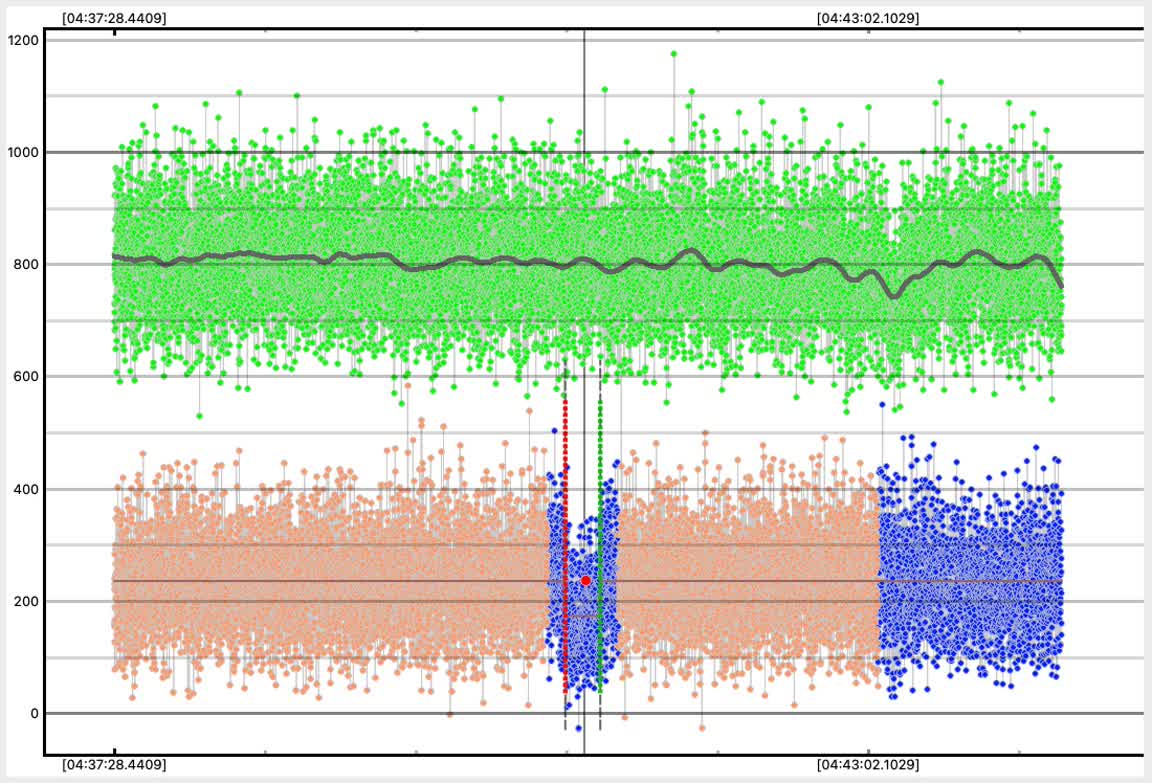
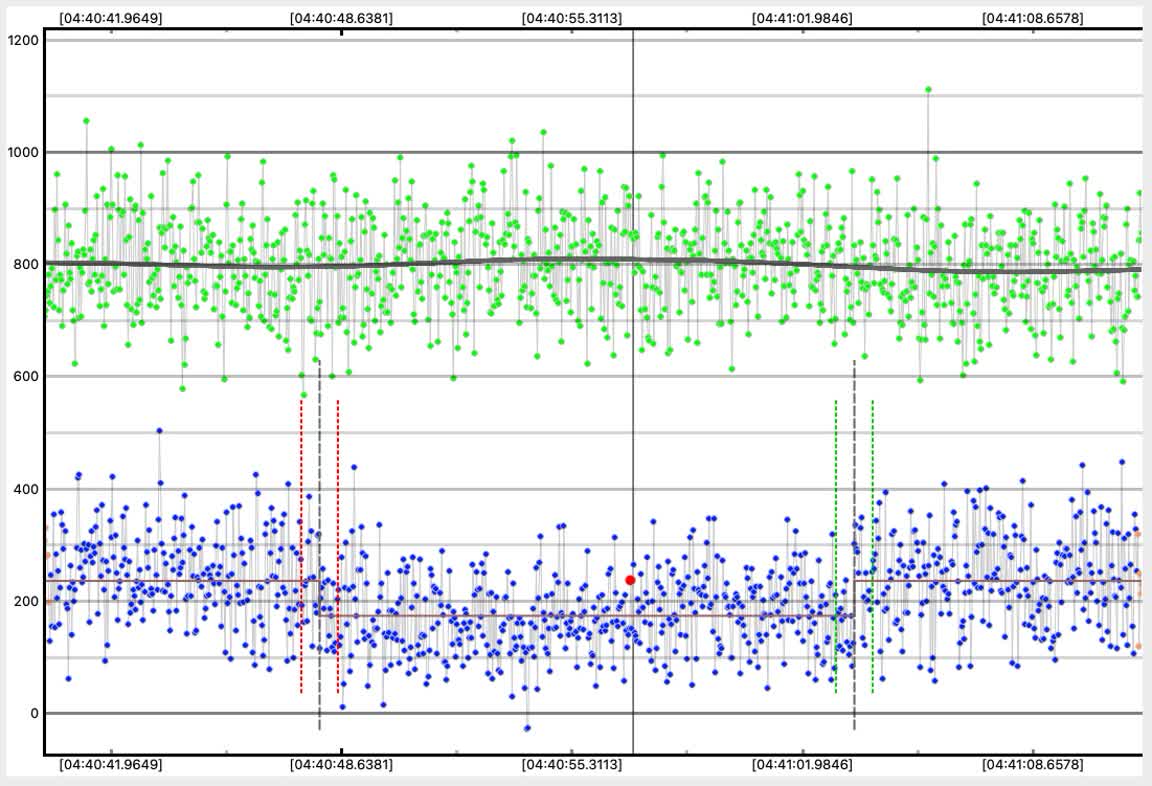
Got a recording from homeI got a 15.4820s event for Aspasia, 2x on Sep. 14 from home.
There is a rough secondary drop in the target at 4:43:17, but it appears in the tracking stars as well.
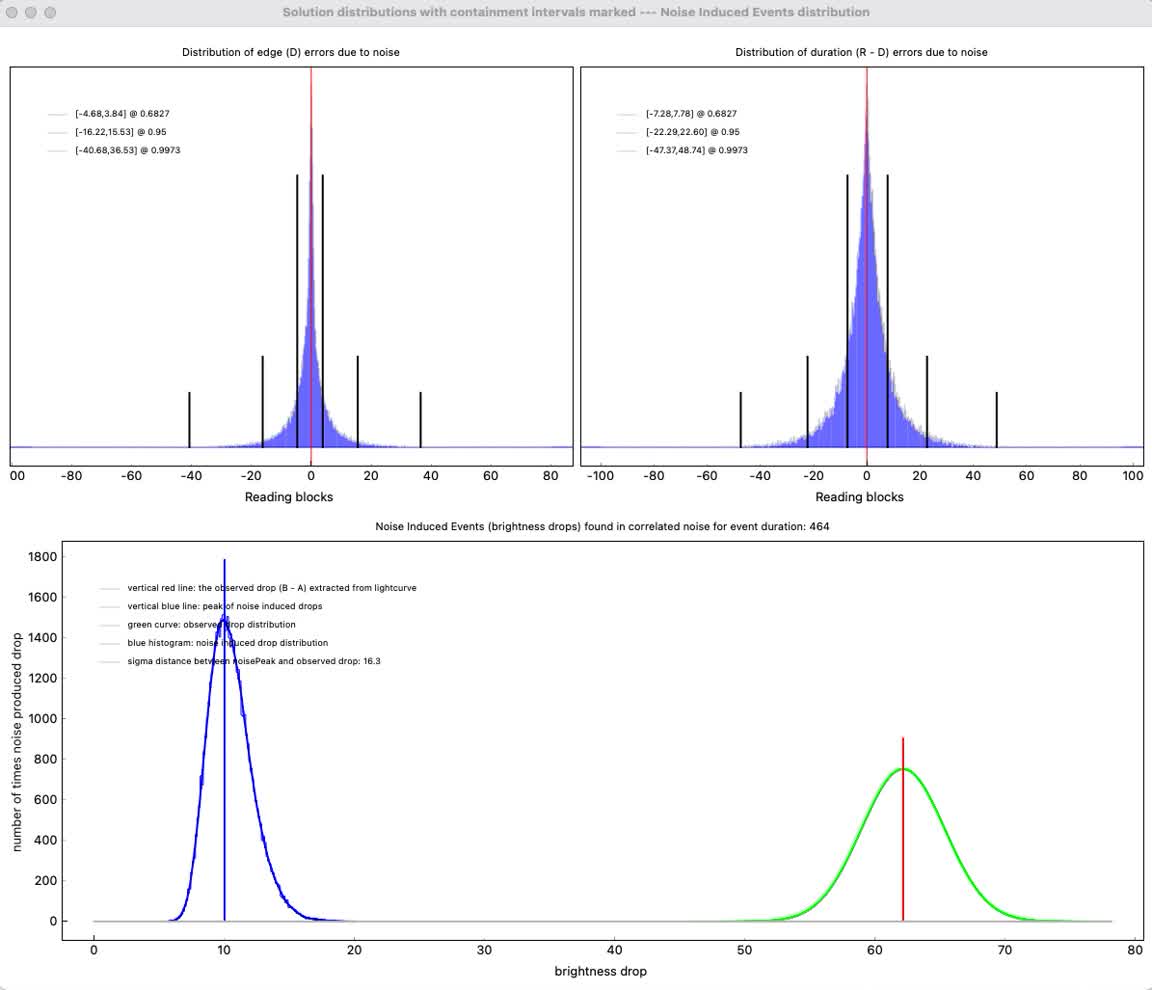
PyOTE NIE sigma distance = 16.3
magDrop report: percentDrop: 26.3 magDrop: 0.331 +/- 0.040 (0.95 ci)
DNR: 0.83
D time: [04:40:48.0041]
D: 0.6800 containment intervals: {+/- 0.1421} seconds
D: 0.9500 containment intervals: {+/- 0.5297} seconds
D: 0.9973 containment intervals: {+/- 1.2882} seconds
R time: [04:41:03.4861]
R: 0.6800 containment intervals: {+/- 0.1421} seconds
R: 0.9500 containment intervals: {+/- 0.5297} seconds
R: 0.9973 containment intervals: {+/- 1.2882} seconds
Duration (R - D): 15.4820 seconds
Duration: 0.6800 containment intervals: {+/- 0.2512} seconds
Duration: 0.9500 containment intervals: {+/- 0.7489} seconds
Duration: 0.9973 containment intervals: {+/- 1.6034} seconds
 |
 |
 |
 |
 |
 |