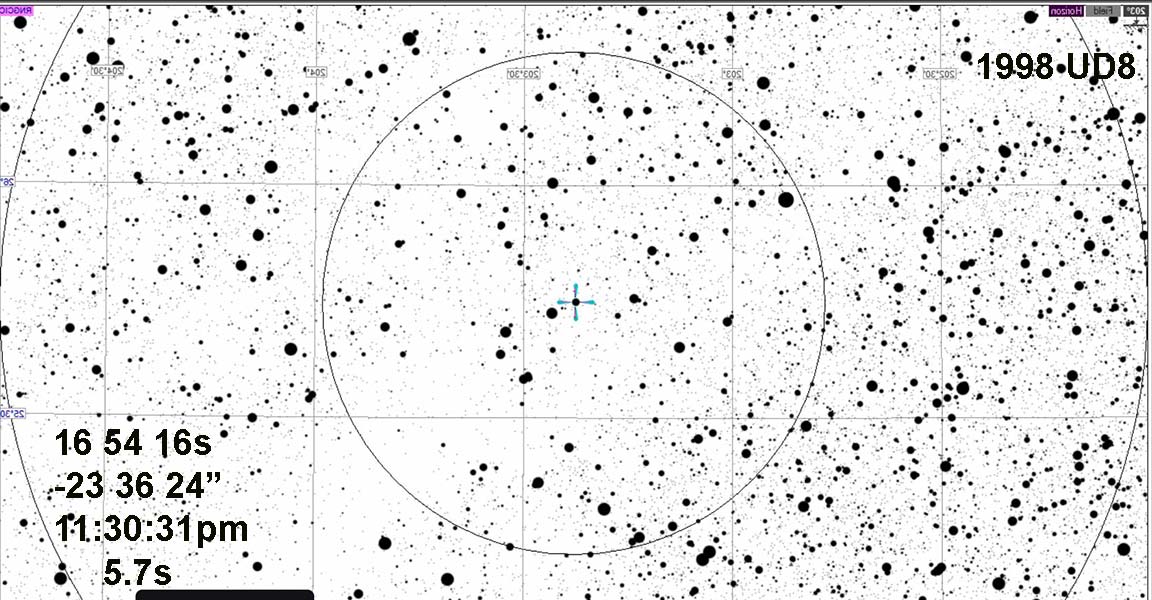
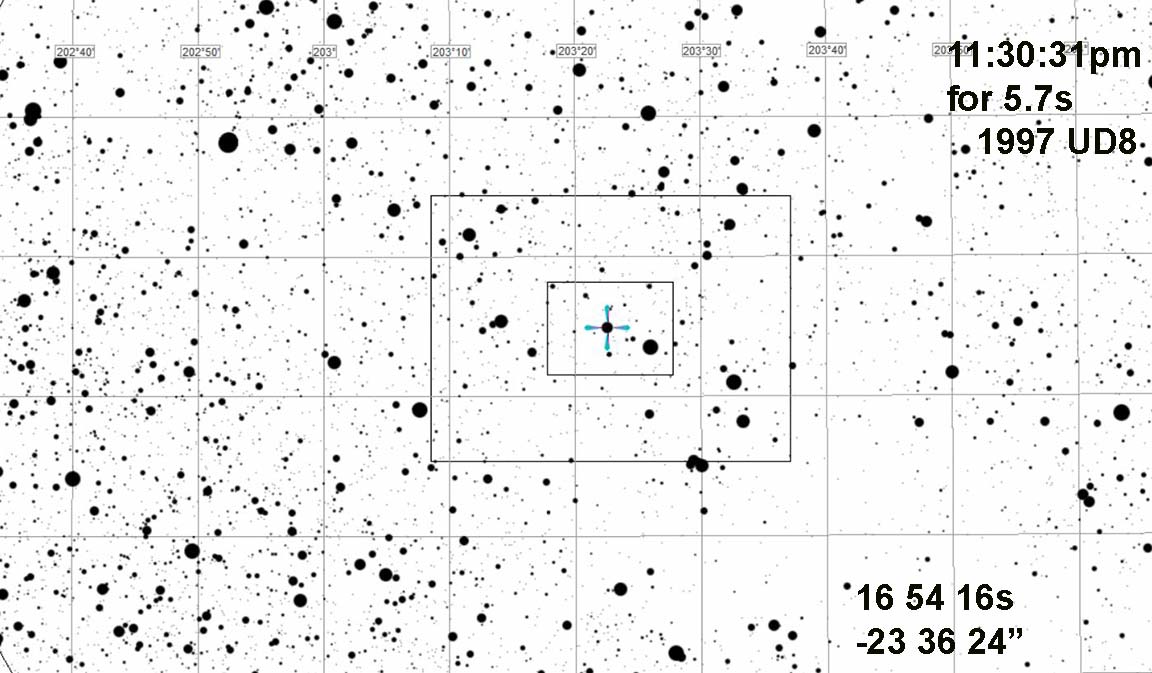
This is a very favorable event, but sticks close to the coast so fog will be a problem. 5.7s duration means it's an excellent candidate for moon-hunting.
Alt=24 Az=207 in Ophiuchus
|
|
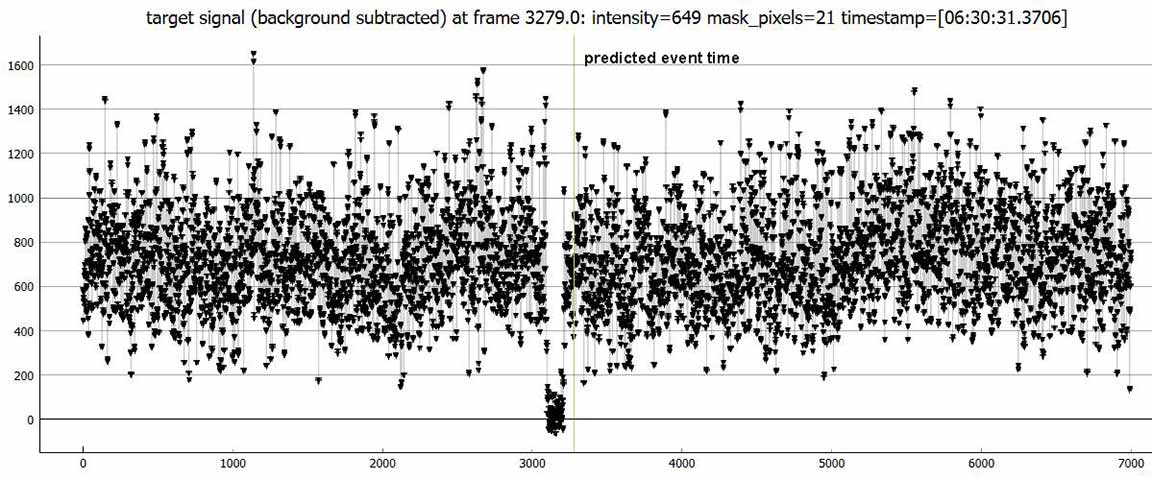
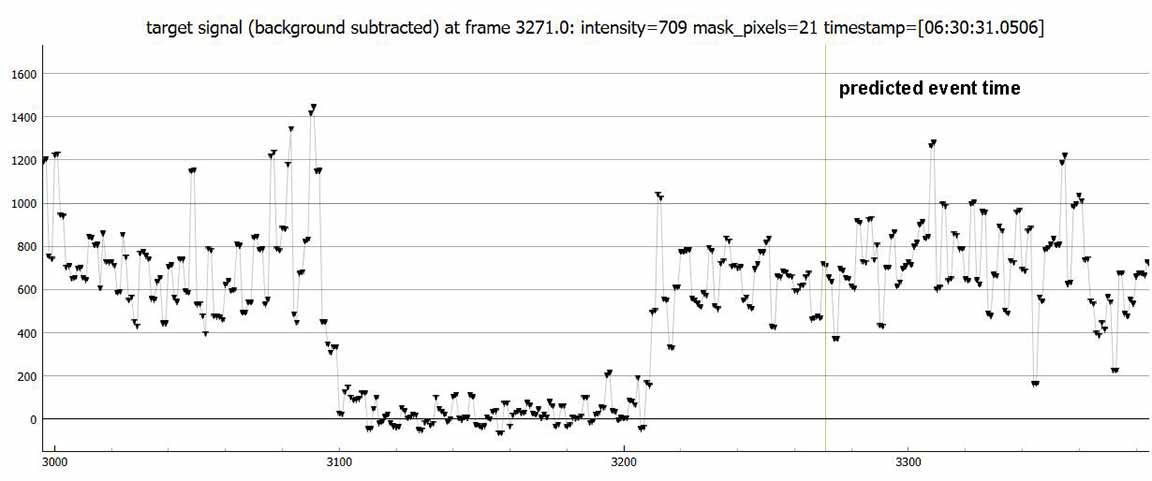
Kirk and I got this one. Karl got "tree'd" and no data, but he was rather north of the predicted shadow too.
I drove to Pelton Ave on the edge of Lighthouse Field to get a good view in the right direction and be closer to the centerline of this mediocre rank event. It worked out well.
36 57 14.56
122 01 55.16
15 m elevation
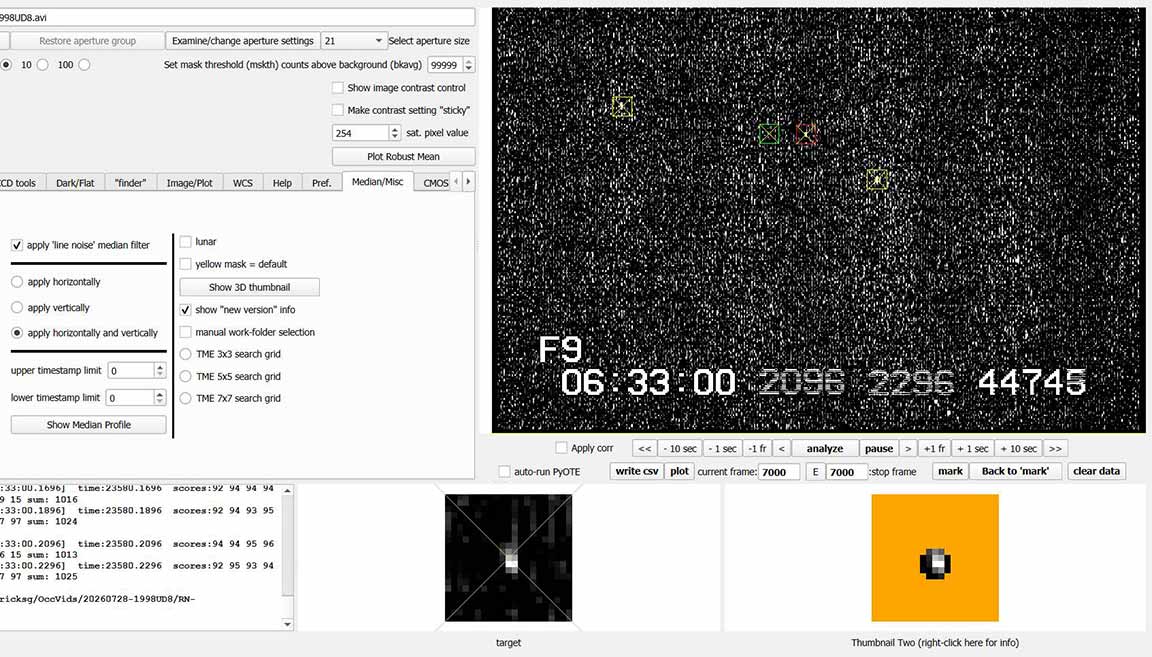
I thought 2x the star looked a bit too noisy for comfort, and settled on 4x instead. I was sure to move the Gain back up to 41 after being at 36 for Juno an hour earlier. Skies were clear, but the moon and nearby ocean made for a bright sky
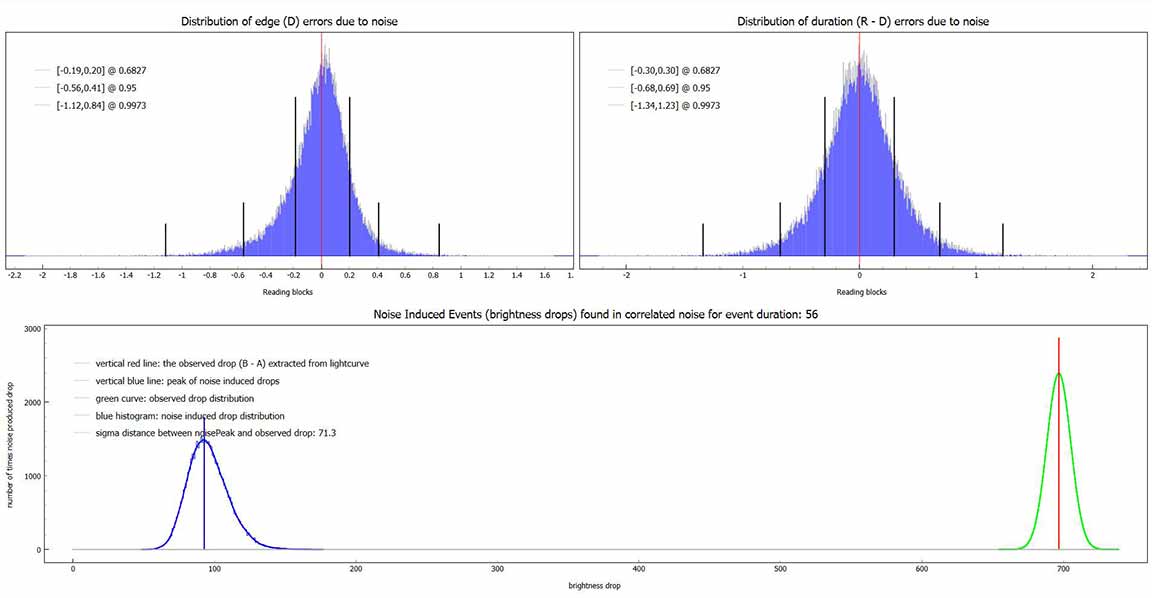
magDrop report: percentDrop: 95.9 magDrop: 3.465 +/- 0.564 (0.95 ci)
NIE Test: 71.3 sigma
DNR: 3.27
D time: [06:30:24.1651]
D: 0.6800 containment intervals: {+/- 0.0162} seconds
D: 0.9500 containment intervals: {+/- 0.0447} seconds
D: 0.9973 containment intervals: {+/- 0.0894} seconds
R time: [06:30:28.5951]
R: 0.6800 containment intervals: {+/- 0.0162} seconds
R: 0.9500 containment intervals: {+/- 0.0447} seconds
R: 0.9973 containment intervals: {+/- 0.0894} seconds
Duration (R - D): 4.4300 seconds
Duration: 0.6800 containment intervals: {+/- 0.0238} seconds
Duration: 0.9500 containment intervals: {+/- 0.0548} seconds
Duration: 0.9973 containment intervals: {+/- 0.1029} seconds
 |
 |
 |
 |
 |
 |
 |
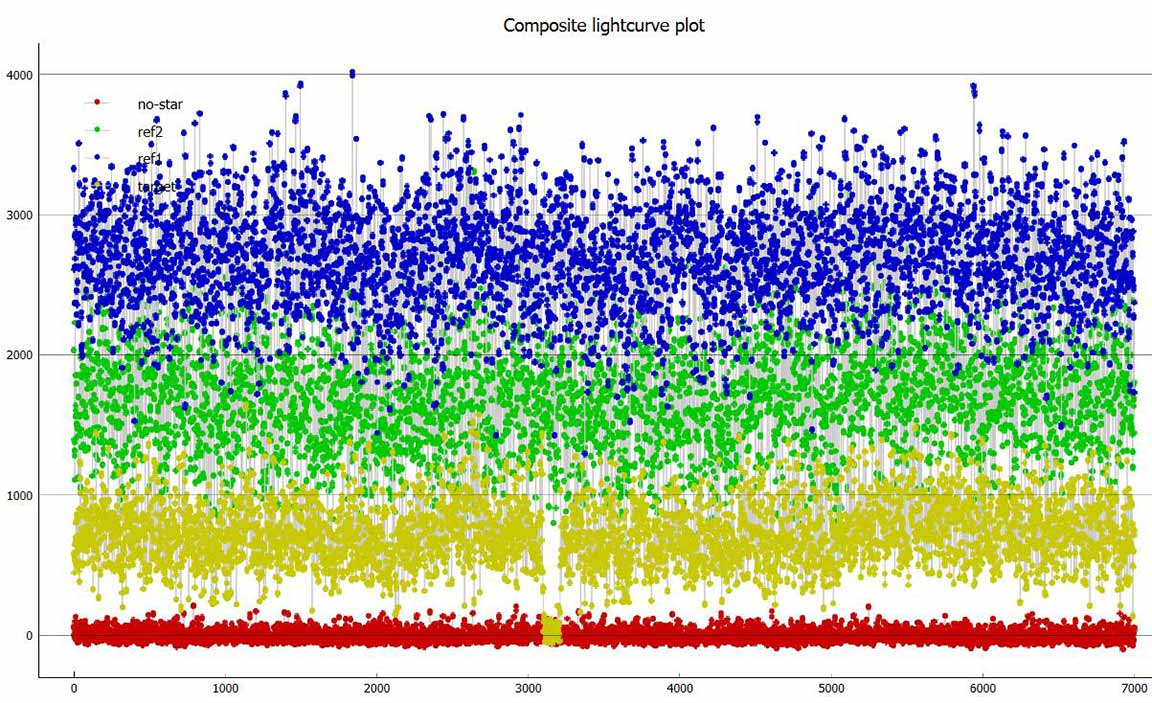
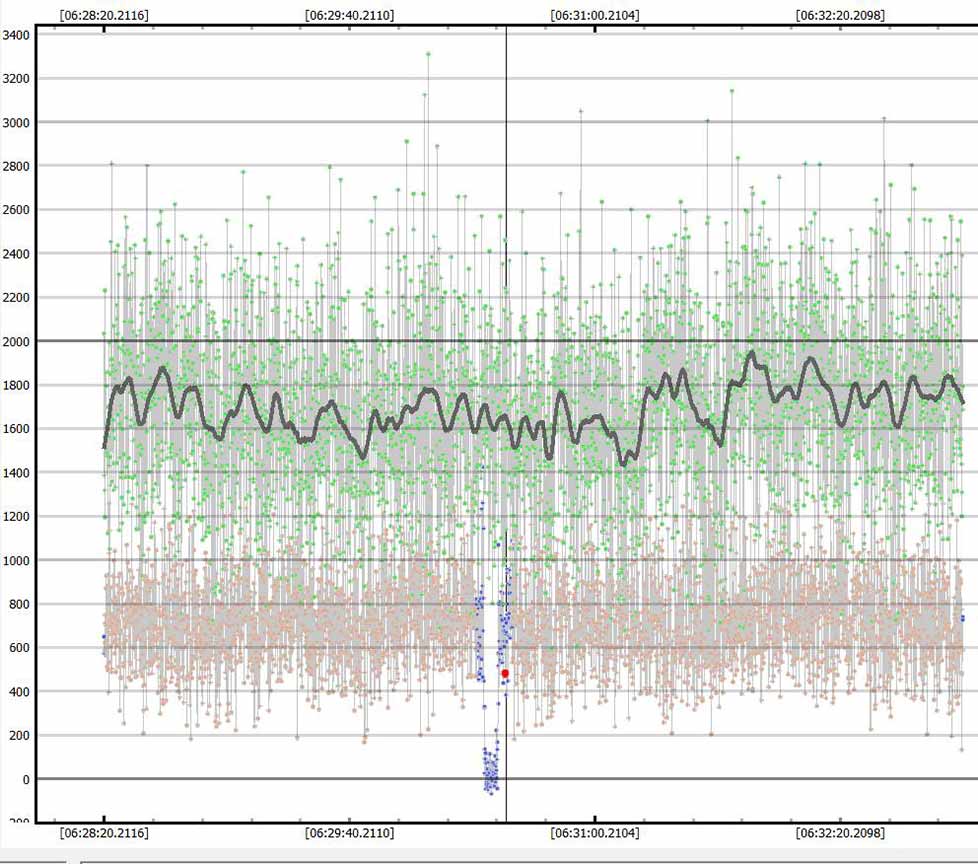
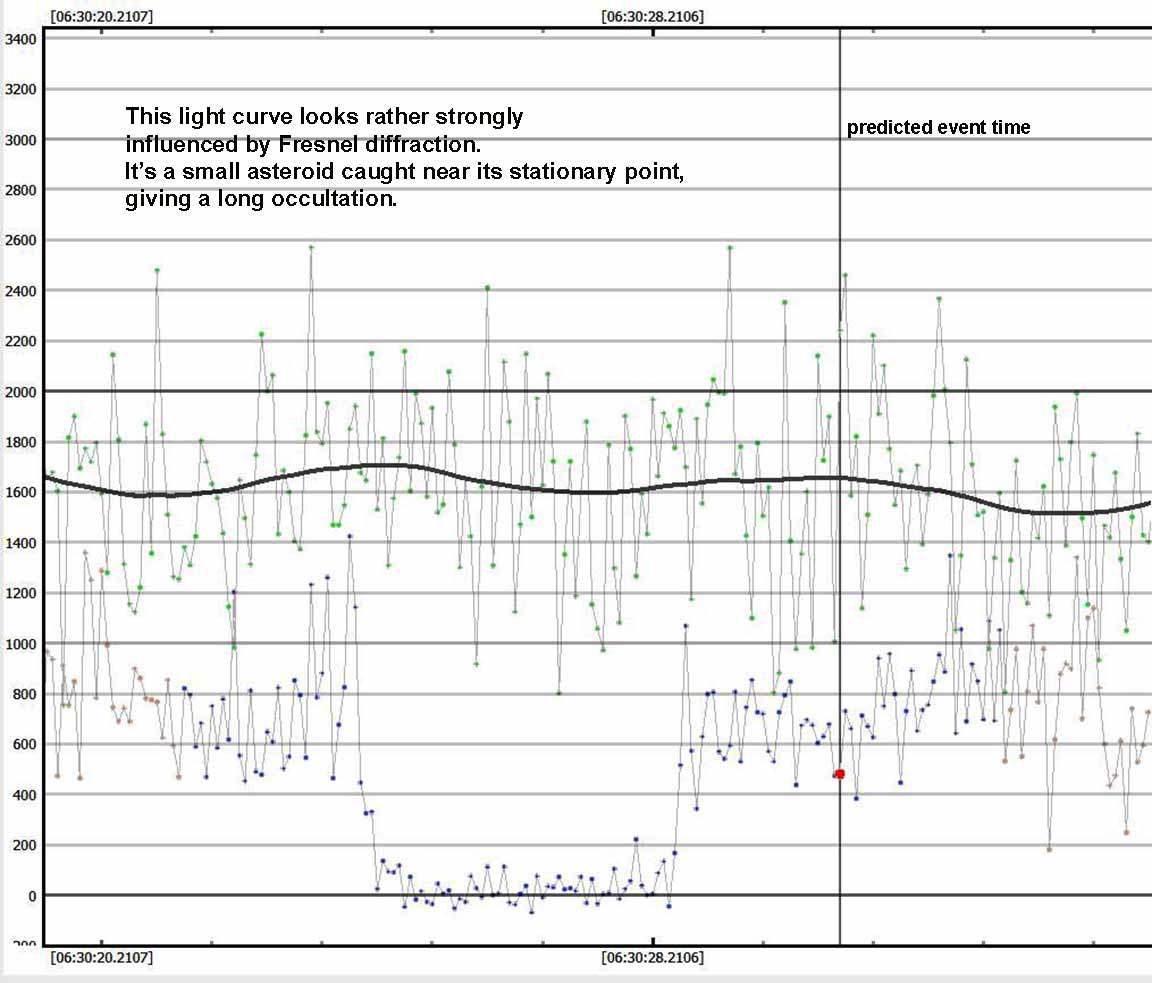
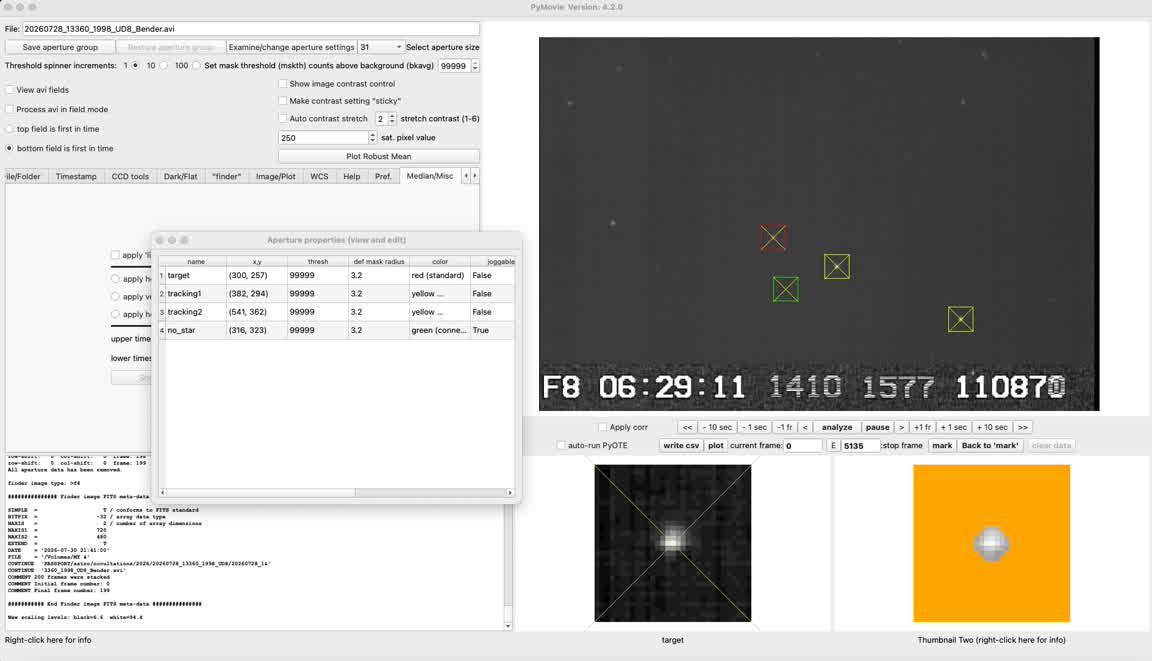
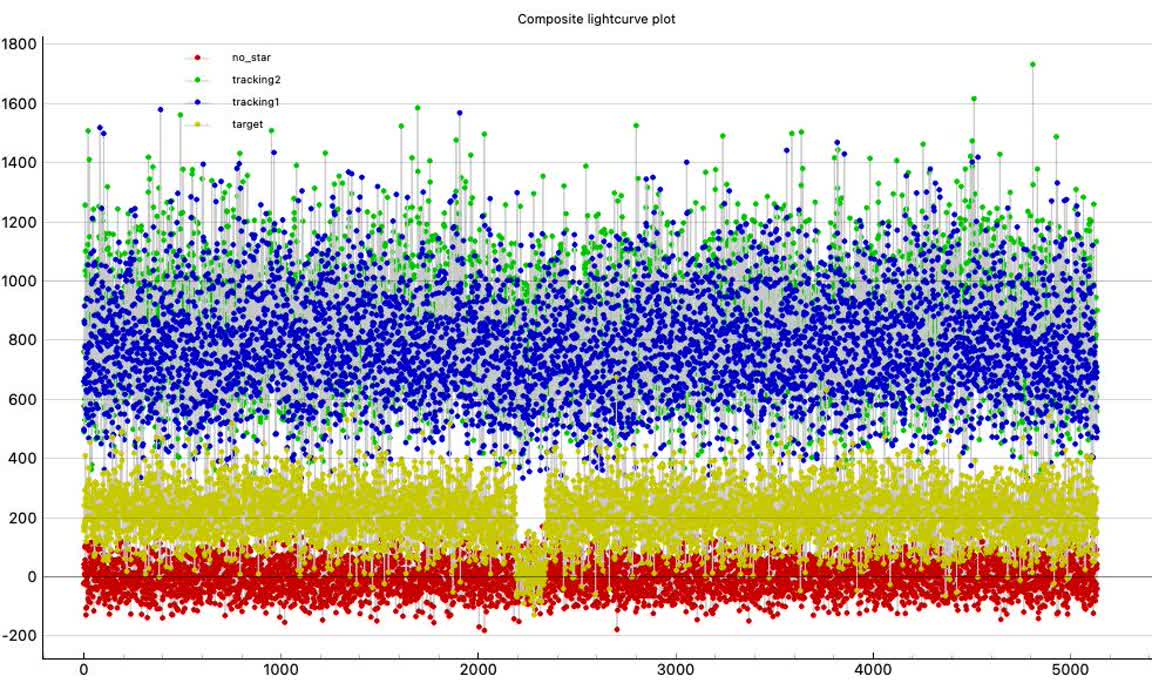
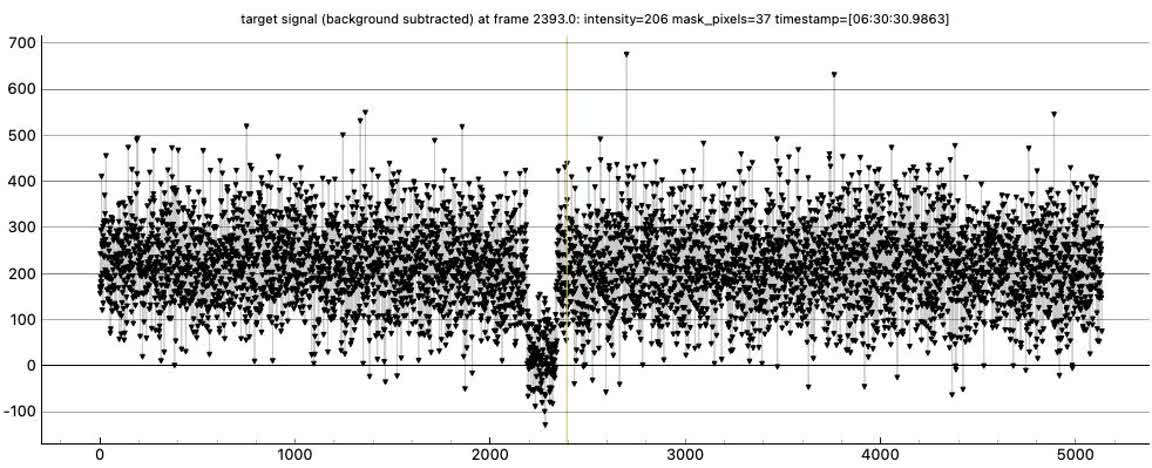
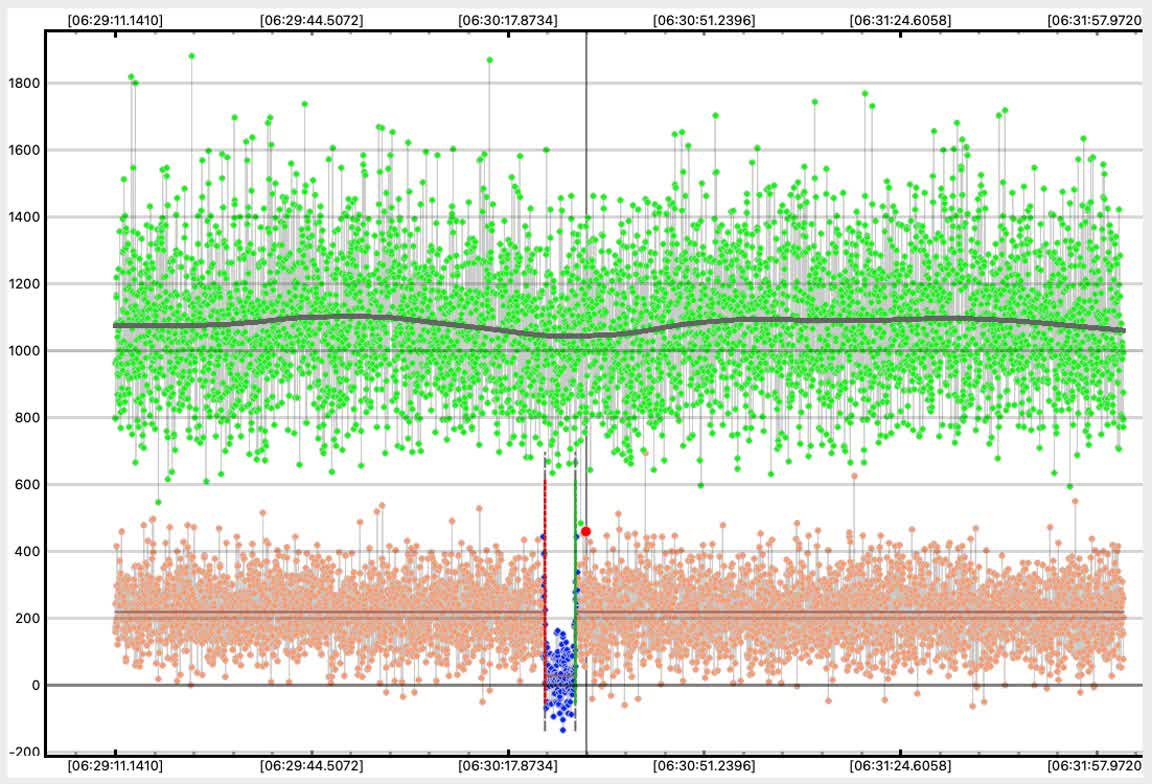
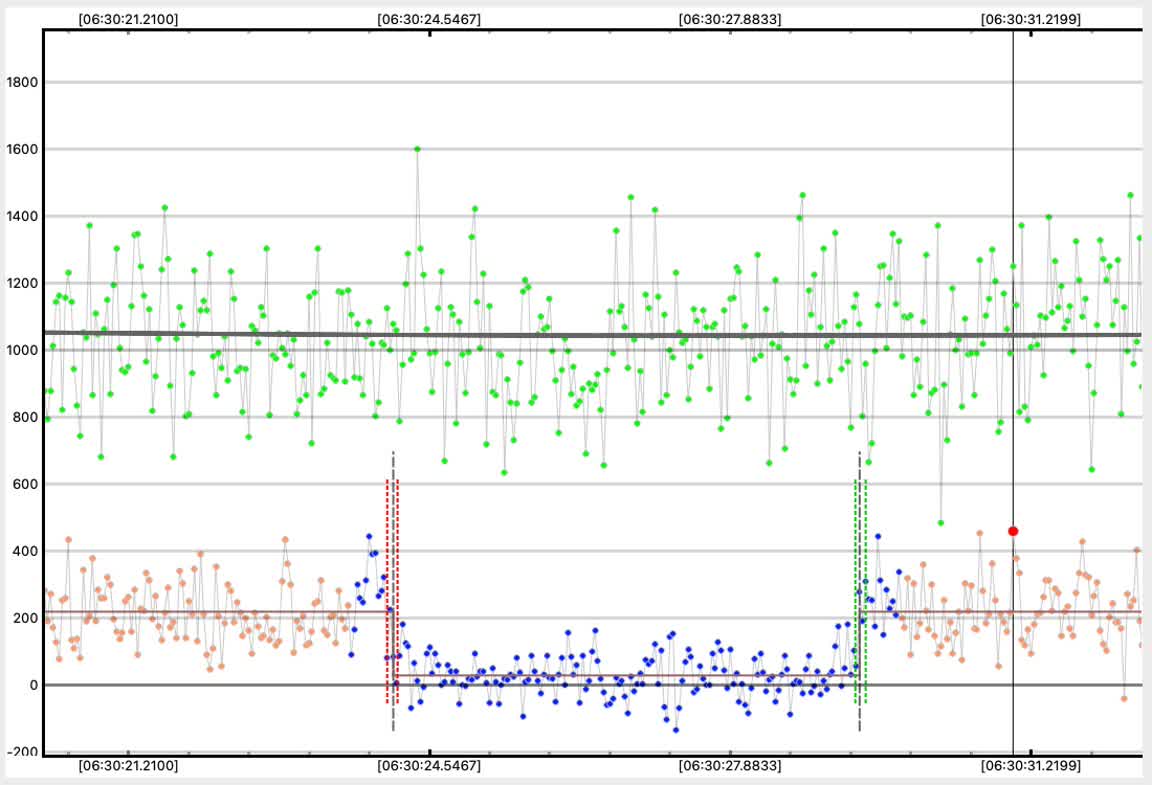
I got a clear, obvious 5.1717s event for 1998 UD8, 2x from home, July 27. Event midpoint is about 4 sec earlier than the predicted 6:30:31 UT for my location.
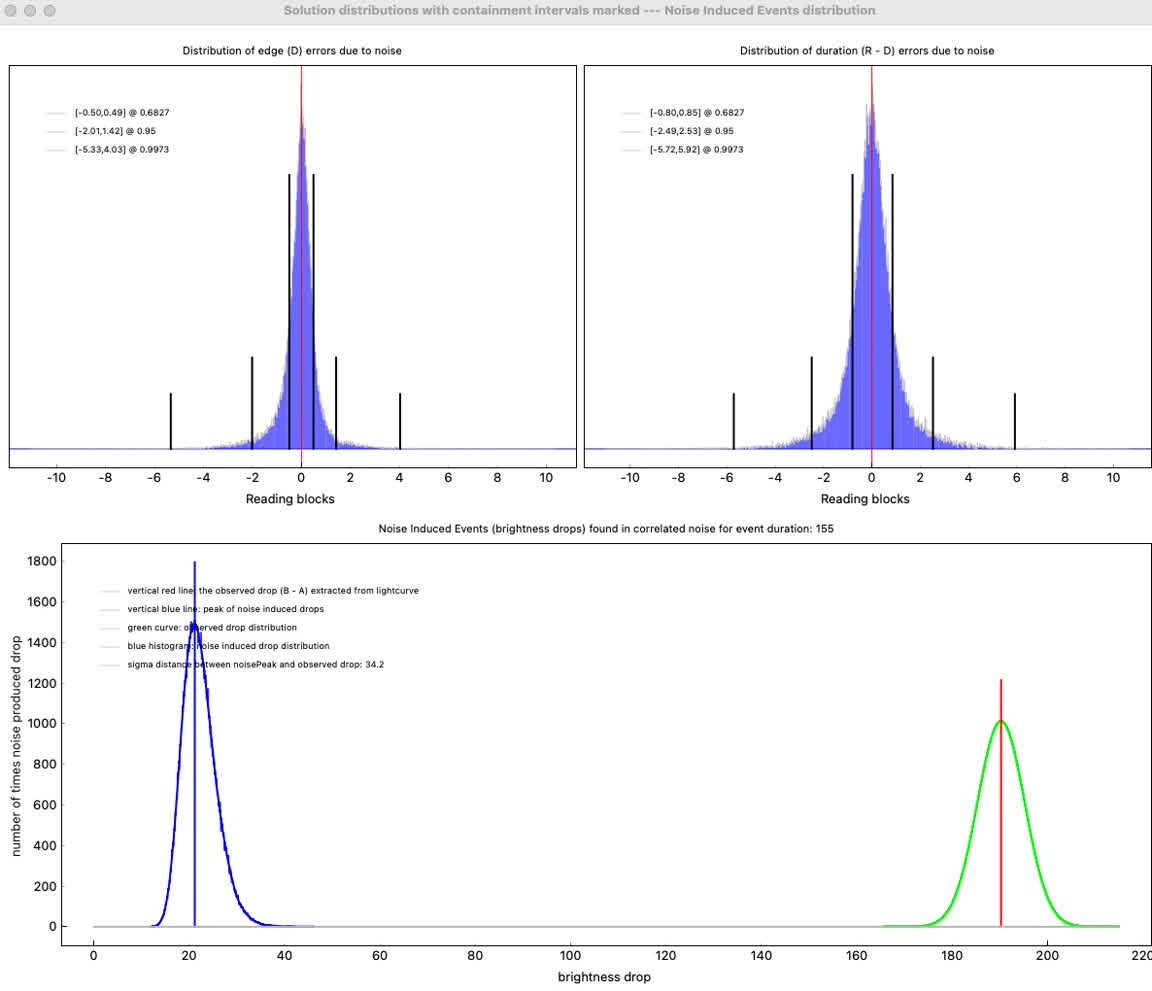
PyOTE NIE sigma distance = 34.2
magDrop report: percentDrop: 87.3 magDrop: 2.242 +/- 0.378 (0.95 ci)
DNR: 2.18
D time: [06:30:24.1463]
D: 0.6800 containment intervals: {+/- 0.0165} seconds
D: 0.9500 containment intervals: {+/- 0.0672} seconds
D: 0.9973 containment intervals: {+/- 0.1779} seconds
R time: [06:30:29.3180]
R: 0.6800 containment intervals: {+/- 0.0165} seconds
R: 0.9500 containment intervals: {+/- 0.0672} seconds
R: 0.9973 containment intervals: {+/- 0.1779} seconds
Duration (R - D): 5.1717 seconds
Duration: 0.6800 containment intervals: {+/- 0.0276} seconds
Duration: 0.9500 containment intervals: {+/- 0.0837} seconds
Duration: 0.9973 containment intervals: {+/- 0.1940} seconds
 |
 |
 |
 |
 |
 |
RN Notes: I see rather clean and obvious evidence of Fresnel diffraction spikes in my occultation, at both the D and the R. I'm thinking that this was easier to see for this particular occultation because the motion of the asteroid was unusually slow. Kirk's data is usually as good or better in quality to mine. His light curve, however, doesn't show clear diffraction spikes like mine. I'll take a guess, that this may be because at his location the target star impacted more surface irregularity across the diameter of the star. This could scramble the signal. His timing accuracies are almost as good as mine - square wave for both of them. His sky might be a bit more variable in transparency than at my site, looking at the PyMOvie light curves.
I don't know how to do a Fresnel diffraction analysis and don't really have time right now to learn it. I'm hoping that a future version of PyOTE may have an automated finder for the best solution of all the parameters involved. Bob Anderson says "GoPyOTE", a new program, is the way to pursue this.