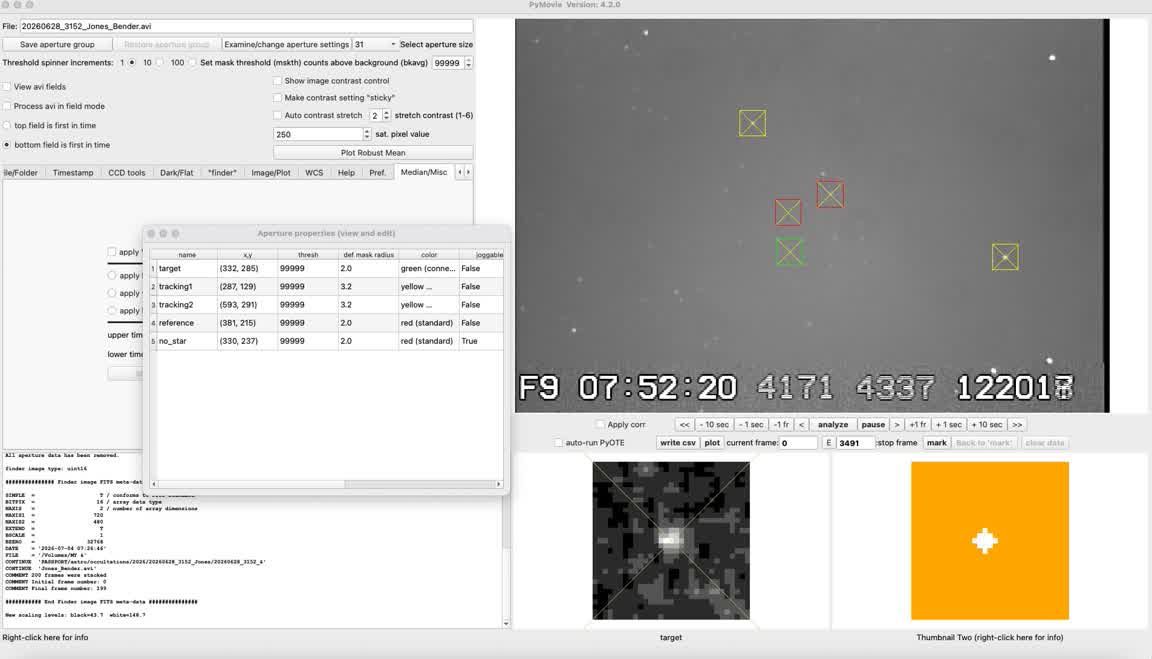
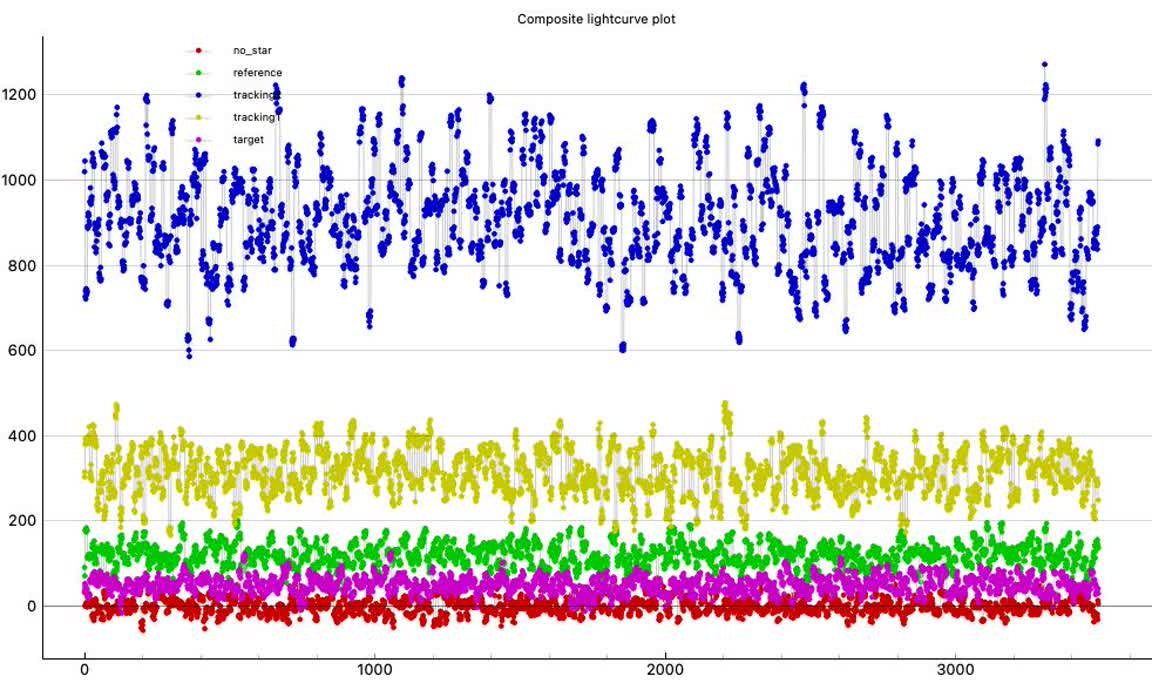
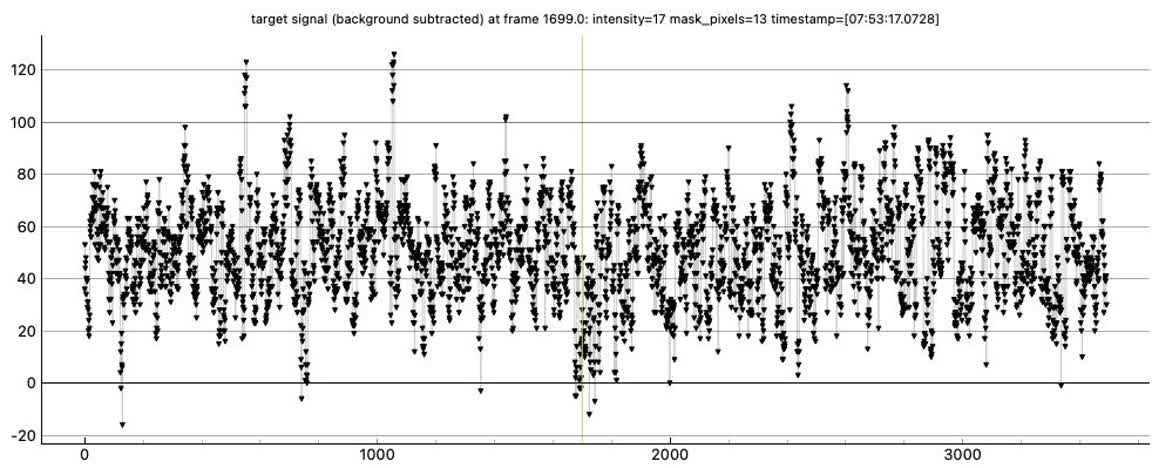
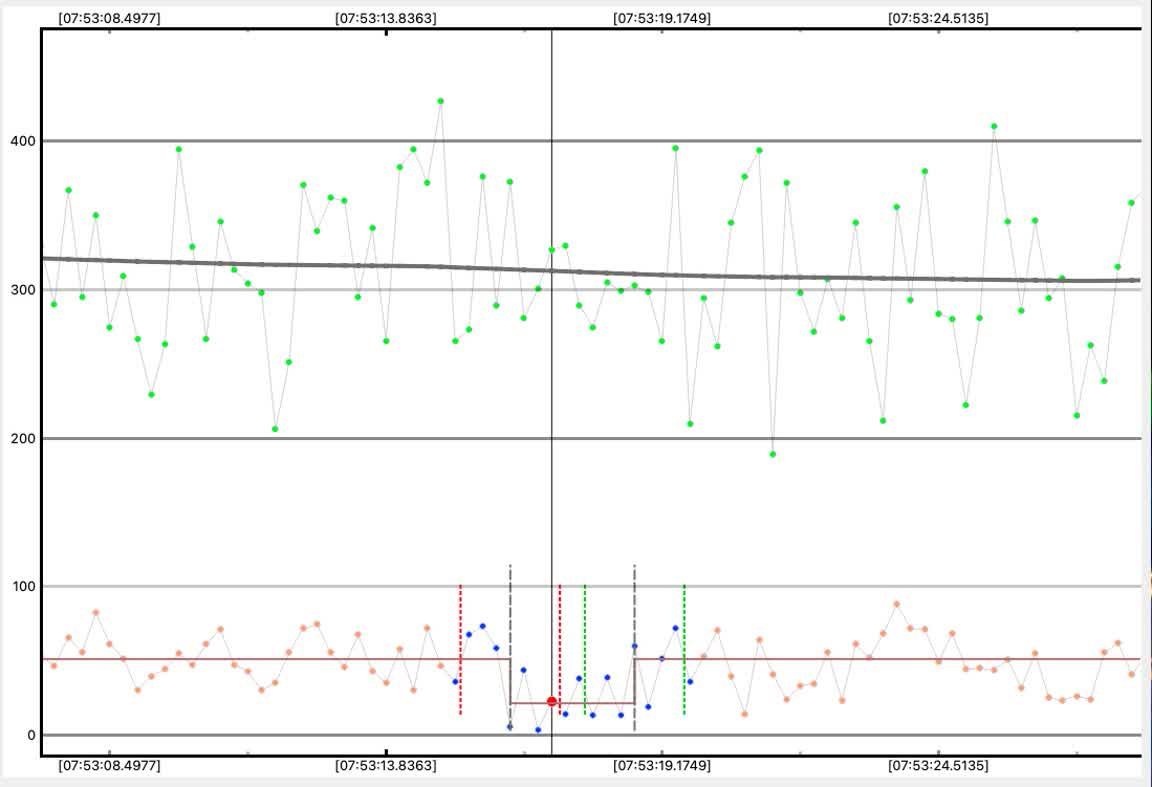
This event is pretty tough. 13.1 star only 9 deg from a 97% moon. Will require very clean skies and good processing choices to get something above noise, is my guess.
It also conflicted (for me) with the higher priority task of dealing with the far more important NEO 1997 NC1 occultation just 20 minutes later I therefore thought it unlikely anyone could try it and I did not make a planning page. I was busy trying to get the 2nd 8SE set up and aligned and pointed, after helping Bernard get set up at a different site for his 5" scope for 1997 NC1. However, I'd downloaded Kirk at New Hope Church up the street early enough he did have time to get data on this event.
I got a noisy positive for Jones,16x, June 28 morning at New Hope church in Aptos. This was after Euryanthe and before 1997 NC1.
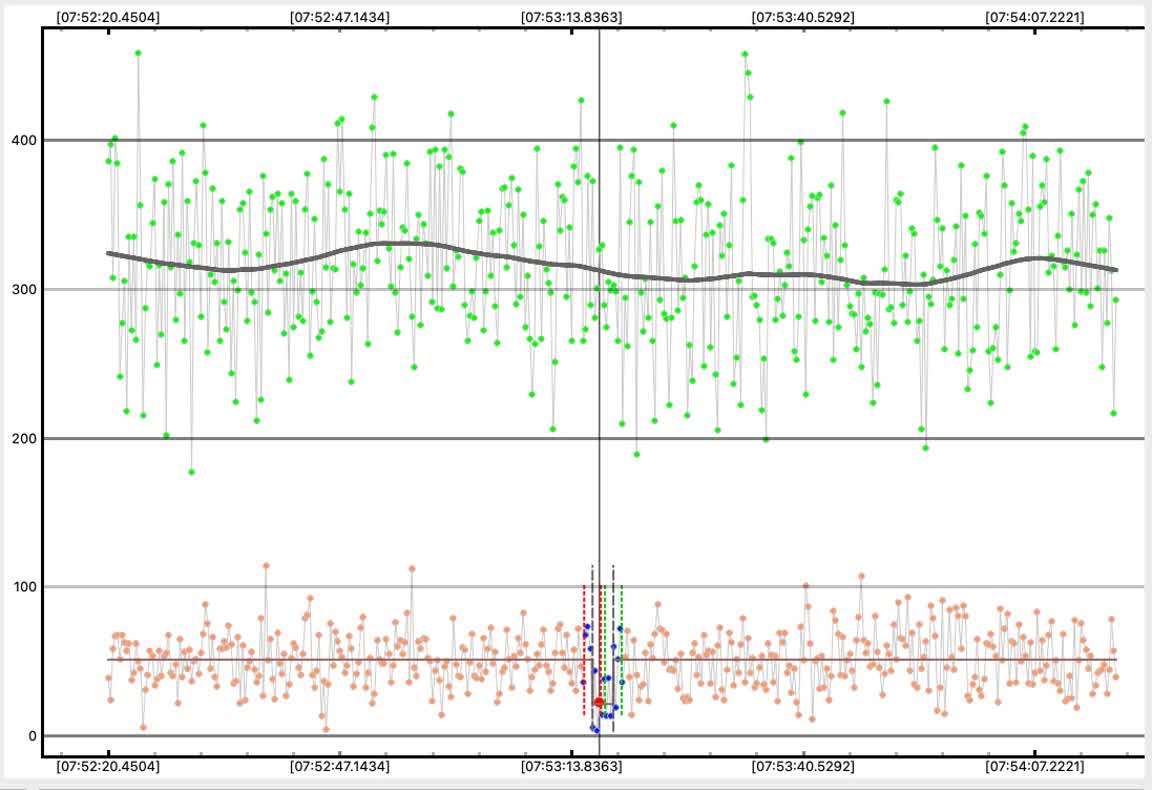
RN didn't have a planning page for it, and I tried but couldn't transfer him my charts. The sky was bright, the target was only 9 degrees from the 97% moon. I turned down the gain so the sky was not totally washed out. I was afraid the target might not be detectable, but it was visible in PyMovie and I got the best results with a small size 2 mask. The error bars are wide, but PyOTE found an event near the predicted time, duration 2.4s which is not too different than observer Kyok who got a 2s event near the center line, max predicted was 3.3s.
PyOTE NIE sigma distance = 2.4.
magDrop report: percentDrop: 58.1 magDrop: 0.943 +/- 0.510 (0.95 ci)
DNR: 1.65
D time: [07:53:16.2386]
D: 0.6800 containment intervals: {+/- 0.2286} seconds
D: 0.9500 containment intervals: {+/- 0.9603} seconds
D: 0.9973 containment intervals: {+/- 2.4236} seconds
R time: [07:53:18.6410]
R: 0.6800 containment intervals: {+/- 0.2286} seconds
R: 0.9500 containment intervals: {+/- 0.9603} seconds
R: 0.9973 containment intervals: {+/- 2.4236} seconds
Duration (R - D): 2.4024 seconds
Duration: 0.6800 containment intervals: {+/- 0.4337} seconds
Duration: 0.9500 containment intervals: {+/- 1.3553} seconds
Duration: 0.9973 containment intervals: {+/- 3.0192} seconds
|
|
|
|
|
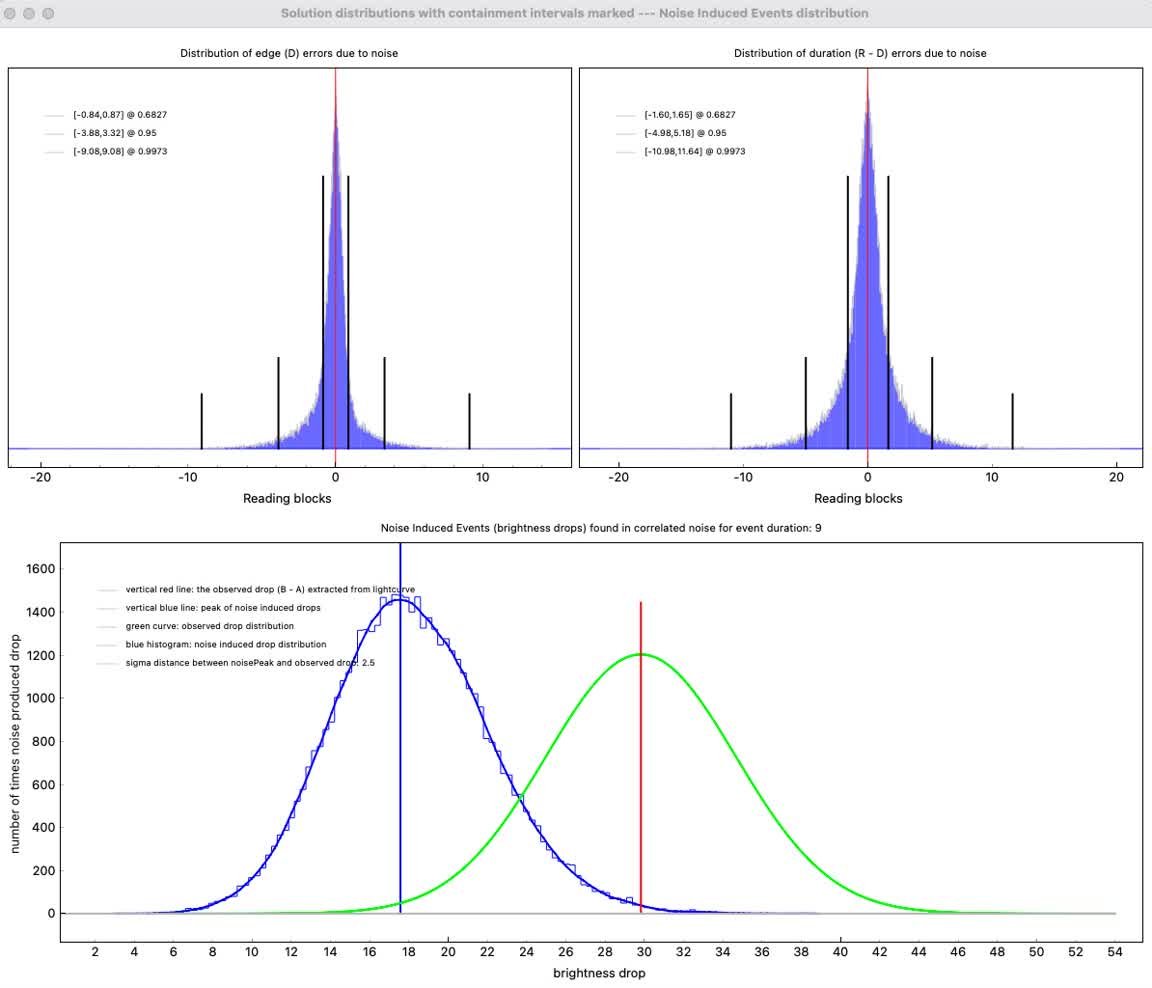 |
RN: I look at this data and it looks quite solid enough to report as a positive. The rank and placement within the path for this low number asteroid all argue strongly that he should have had a positive. 2.4s vs the 3.0s for maximum is quite reasonable. If I were the reviewer, I would not get persnickety about the NIE test gave only 2.4 sigma. Given the bright sky and faint star, that can be easily forecast to be the case. I say this is good work that should be reported in astrometry as a positive.