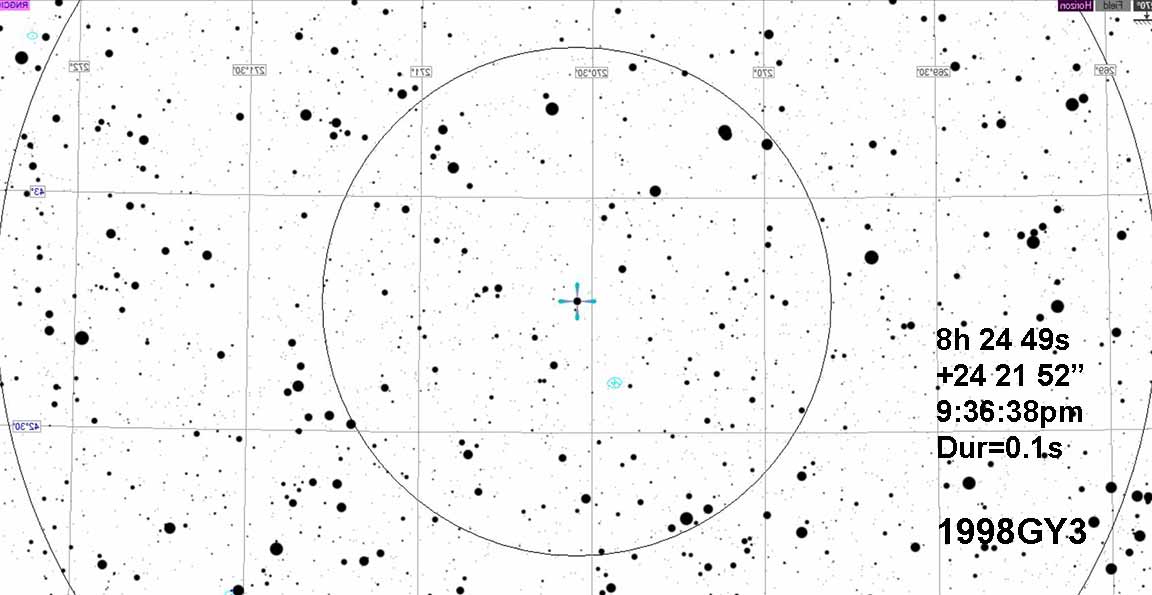
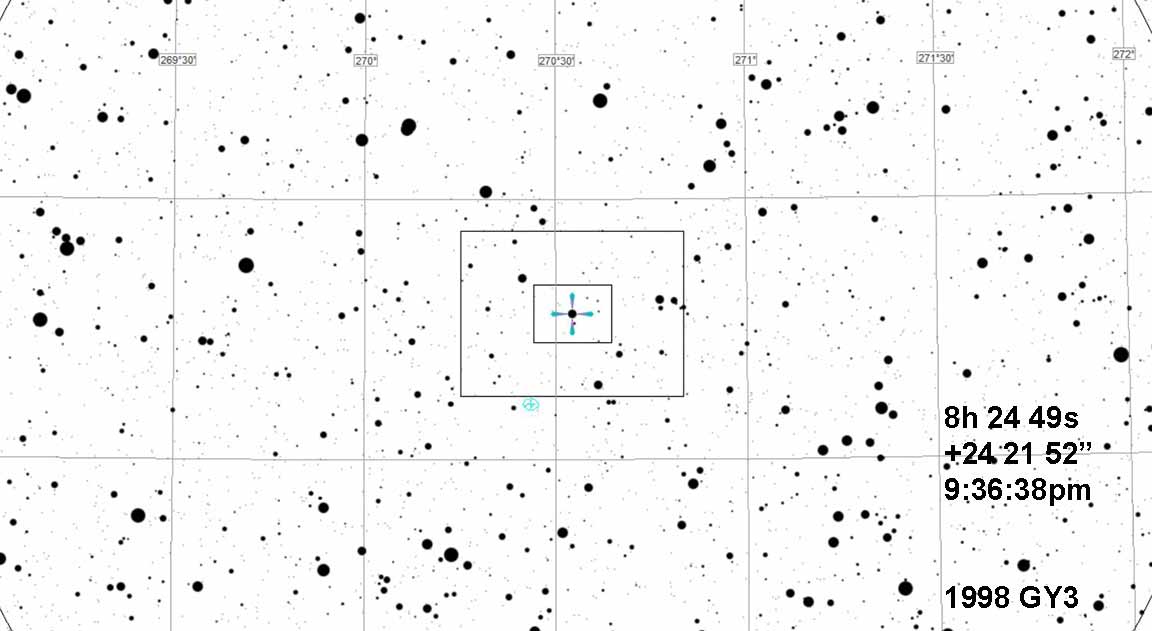
This one is a bit awkward; it's final exam night for Astro 8A - from 6-8:50pm. I will need to terminate the class sharp at 8:45pm and drive quickly, with Jordan, to Pleasure Point to get this after a quick set up. The event only lasts 0.1s, which is only 5 points inside the occultation given 1x setting. But the star is bright at 11.0 and so this is do-able if we're in the path. The RUWE = 0.95 which is solid . Rank is OK.
Path angles from Santa Cruz down and re-enters the land south of Watsonville. We can get near the centerline if we drive efficiently to find street parking at Pleasure Point Park, where the little store is and the surfer's entrance to "38th" surf spot. This is a 14 minute drive from room 705 Cabrillo. If we start at 8:16pm we can get there at 9pm and have 36min to get on-target. That means we leave class EARLY. Will my students be there on time and be efficient? Probably not.
Alt=39 Az=273 in Cancer 8 degrees right of Beehive Cluster.
|
|
Jordan and I double-teamed this one. Bernard biked home via this out of the way spot, Rockview County Park off East Cliff and helped Jordan get situated while I got my own gear going.
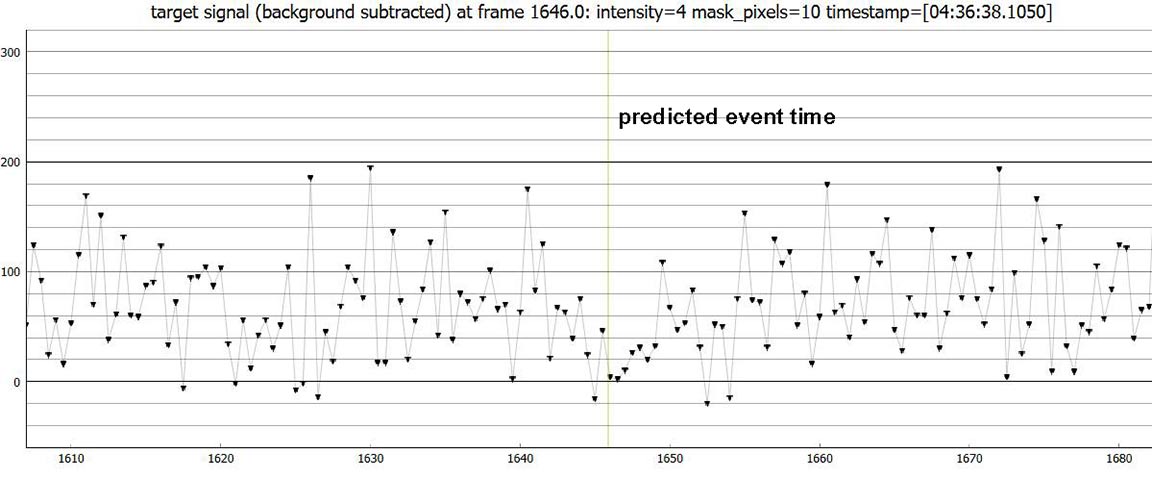
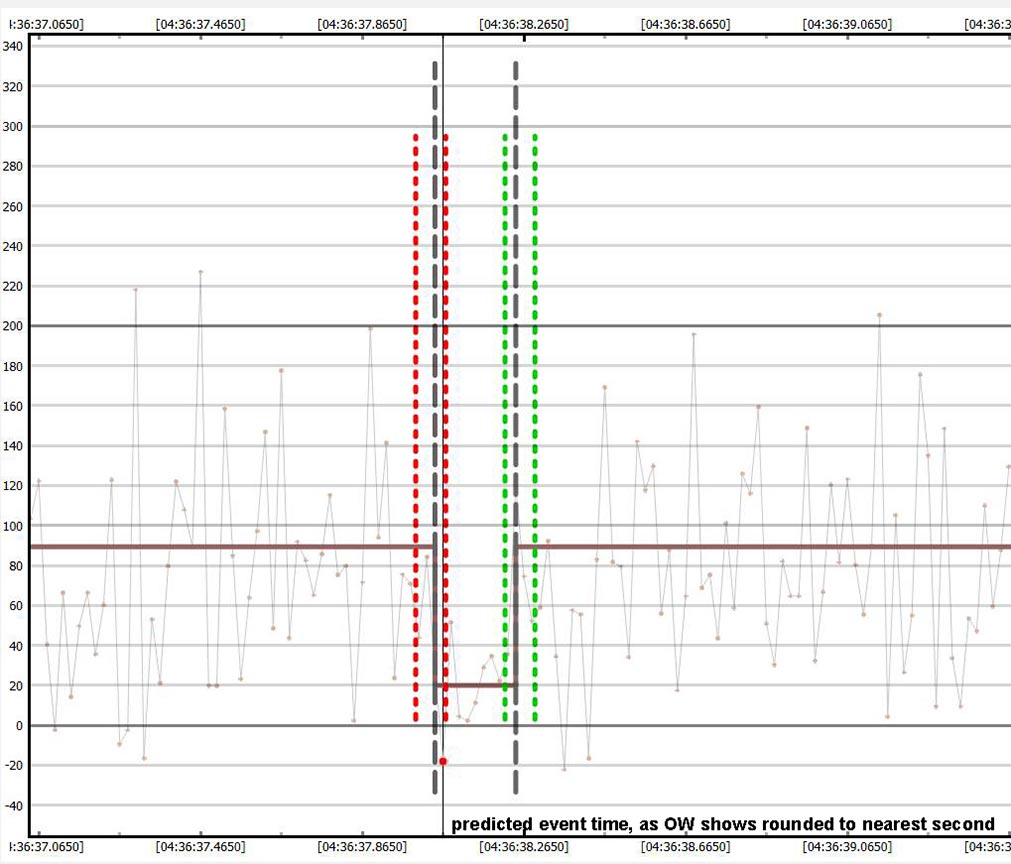
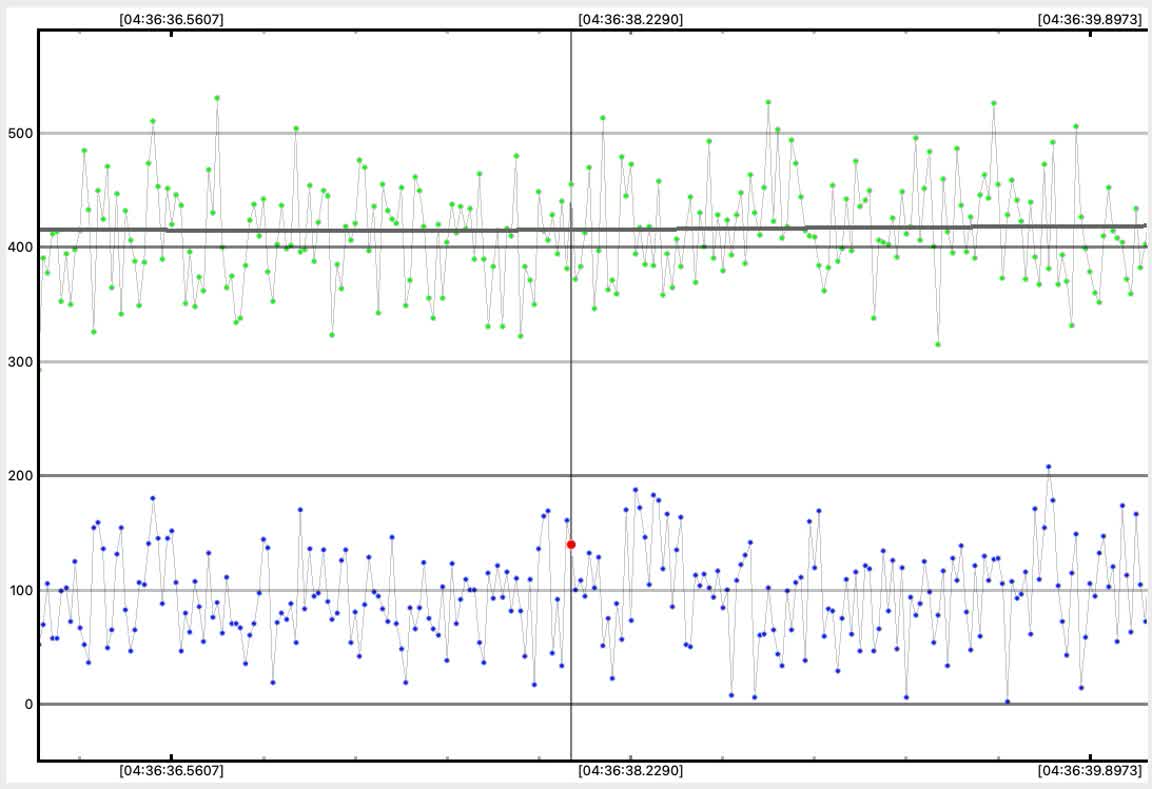
I got a recording at 1x under good conditions from the west edge of the cul-de-sac of Rockview Drive at Pleasure Point. Could not tell visually if there was an event. But on reduction, using the min/max event finder method in PyOTE, it found a significant event at the correct predicted time. The target star on the monitor was dimmer than I'd hoped, but I needed to go 1x in order to get enough data points for significance to be determined. Predicted duration was a little less than 0.2s, but small asteroids can be rather oblong.
I used 1x setting, sharpness=4 as usual default, gain=41 as max and default, gamma=1.0 as default, and I used median filtering in both horizontal and vertical direction
magDrop report: percentDrop: 77.6 magDrop: 1.626 +/- 0.693 (0.95 ci)
DNR: 1.39
D time: [04:36:38.0450]
D: 0.6800 containment intervals: {+/- 0.0125} seconds
D: 0.9500 containment intervals: {+/- 0.0475} seconds
D: 0.9973 containment intervals: {+/- 0.1122} seconds
R time: [04:36:38.2450]
R: 0.6800 containment intervals: {+/- 0.0125} seconds
R: 0.9500 containment intervals: {+/- 0.0475} seconds
R: 0.9973 containment intervals: {+/- 0.1122} seconds
Duration (R - D): 0.2000 seconds
Duration: 0.6800 containment intervals: {+/- 0.0204} seconds
Duration: 0.9500 containment intervals: {+/- 0.0555} seconds
Duration: 0.9973 containment intervals: {+/- 0.1175} seconds
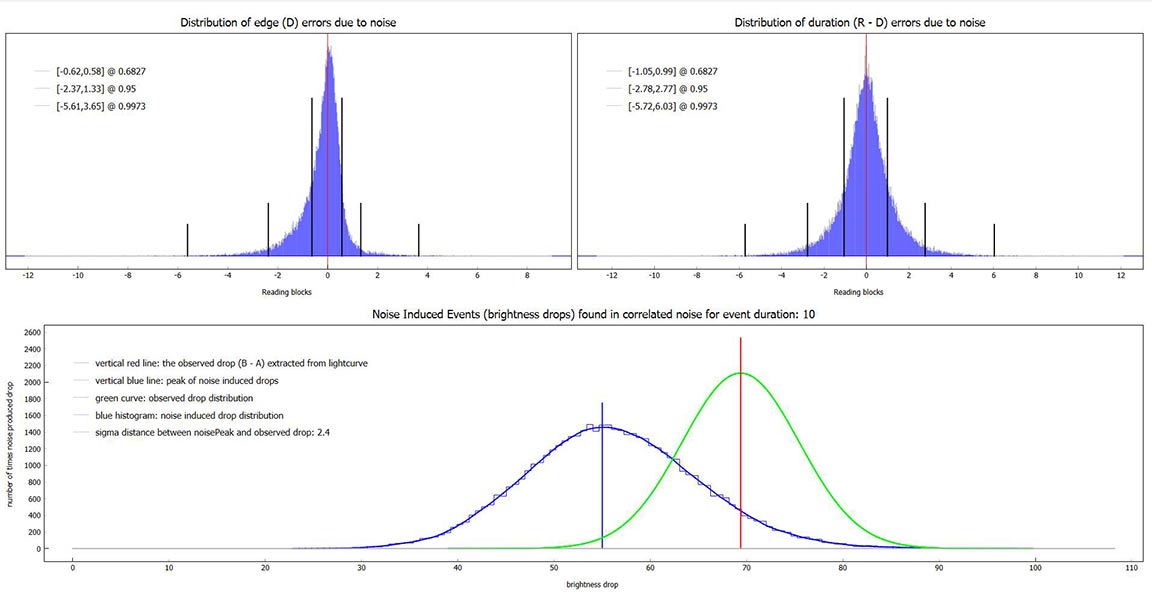
In PyOTE I looked for an event using min/max points inside the occultation. The solutions shown are the result of PyOTE having the entire rest of the light curve to find the most significant possible event. The D and R timings were identical and the timing confidence limits virtually identical as well. The NIE test was best for the 6/22; NIE= 2.4 sigma. NIE=2.3 sigma for 4/22. NIE=2.2 sigma for 3/22 points limits. I tried min/max points = 6/22, and 4/22, and 3/22 and all gave the same best solution as the drop which is right at the predicted time. I did have to trim out sustained drop early in the recording due to an apparent faint bit of haze.
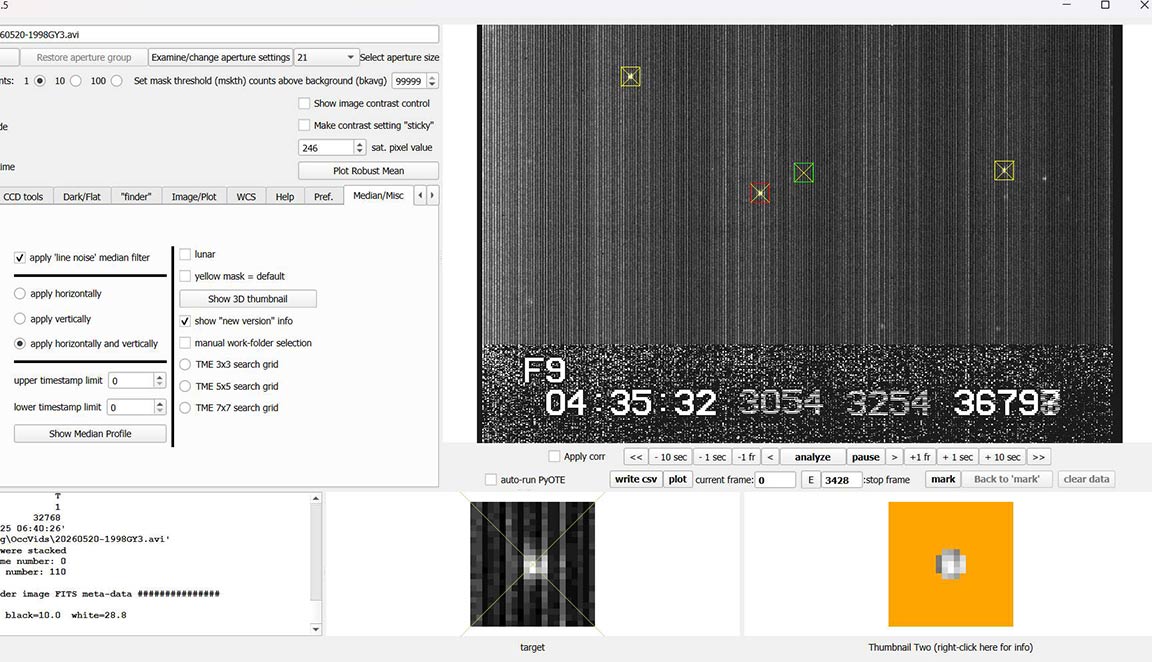
When contrast bar is tightly squeezed to show a faint star best, vertical column banding shows up. However, it is not visible during thee analysis as the median filtering takes it out. |
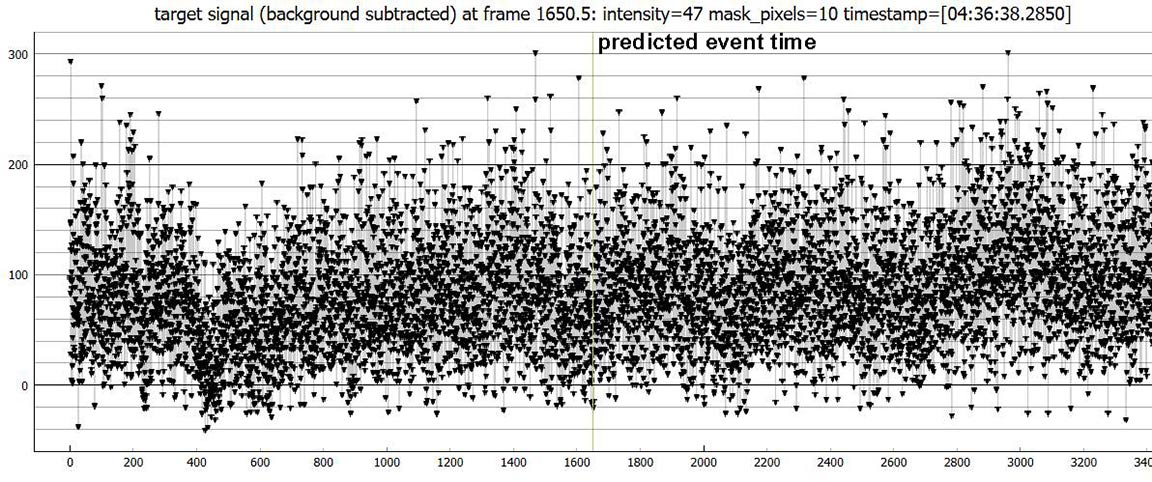 |
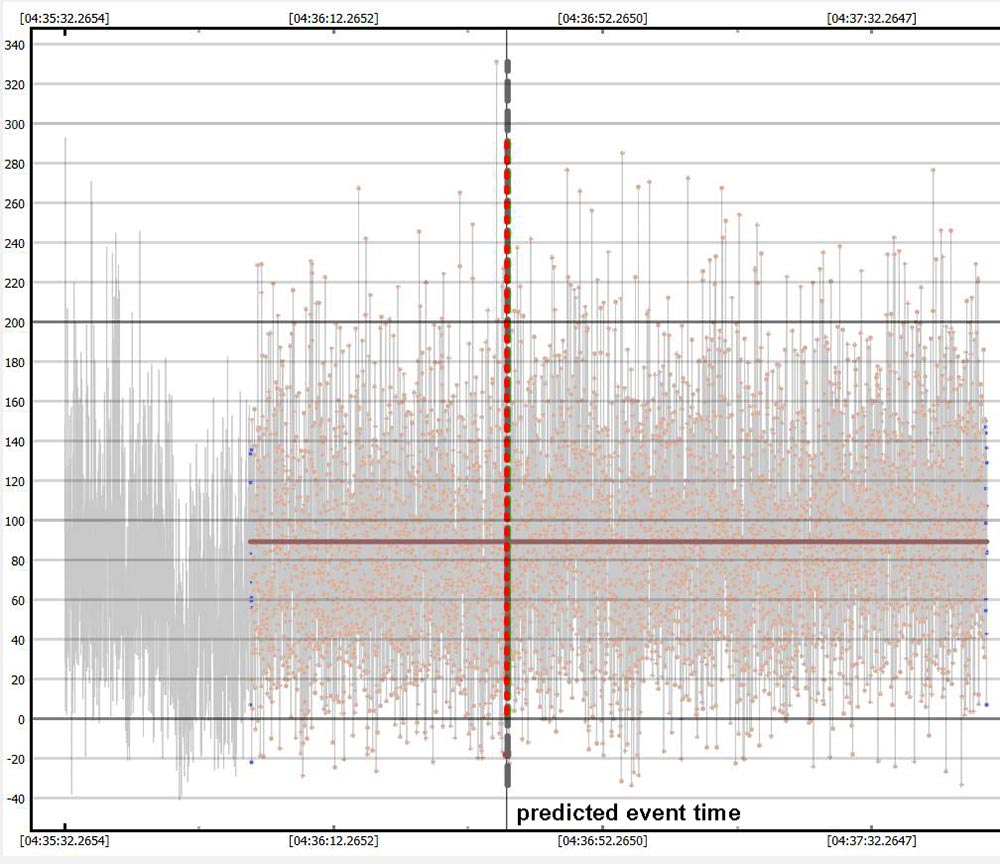
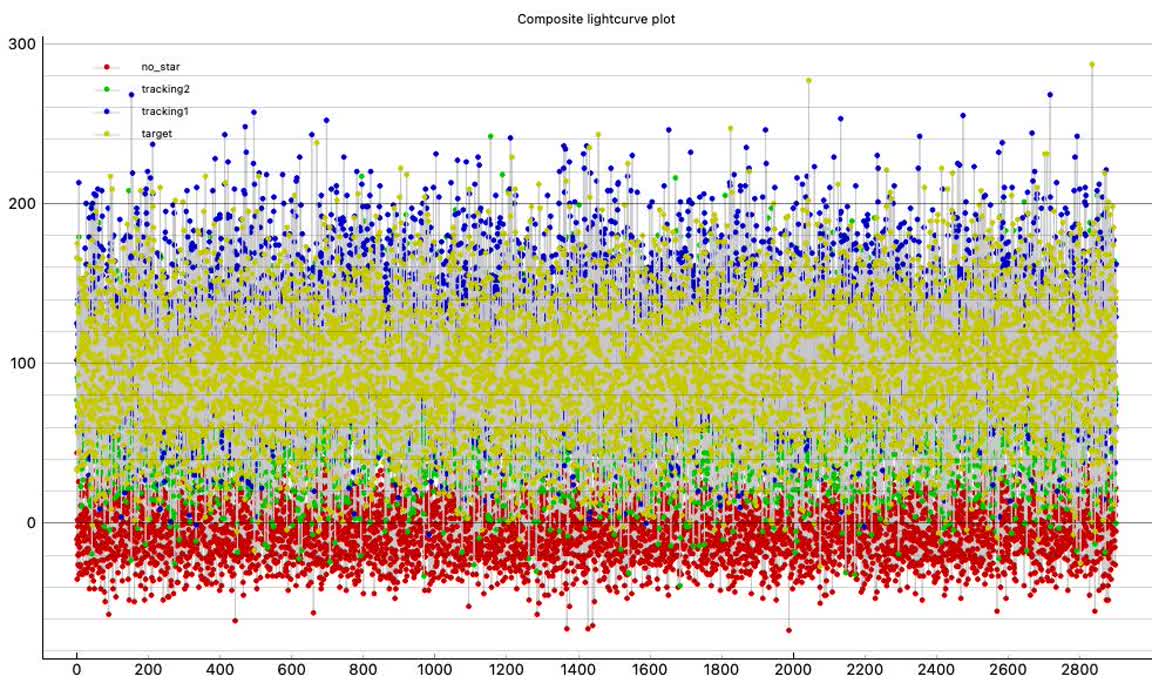
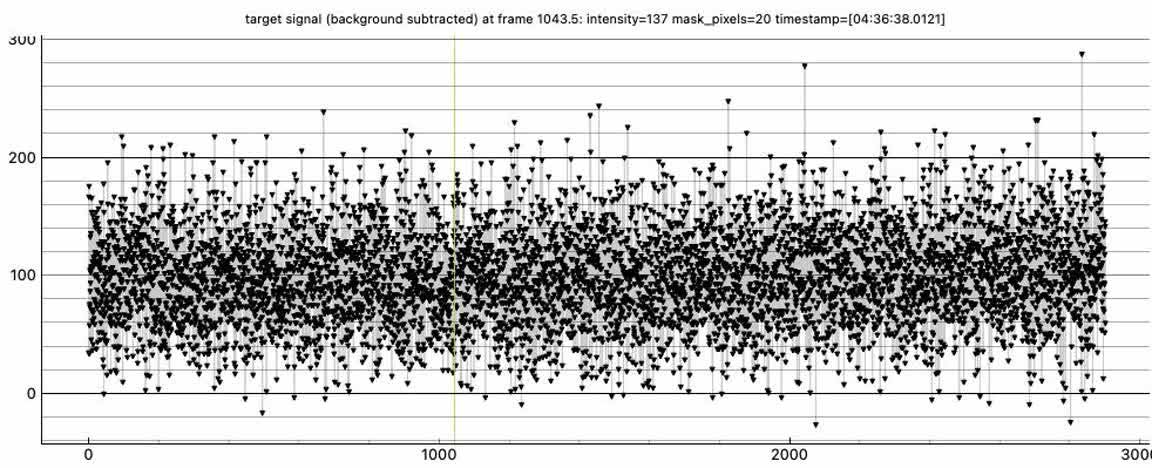
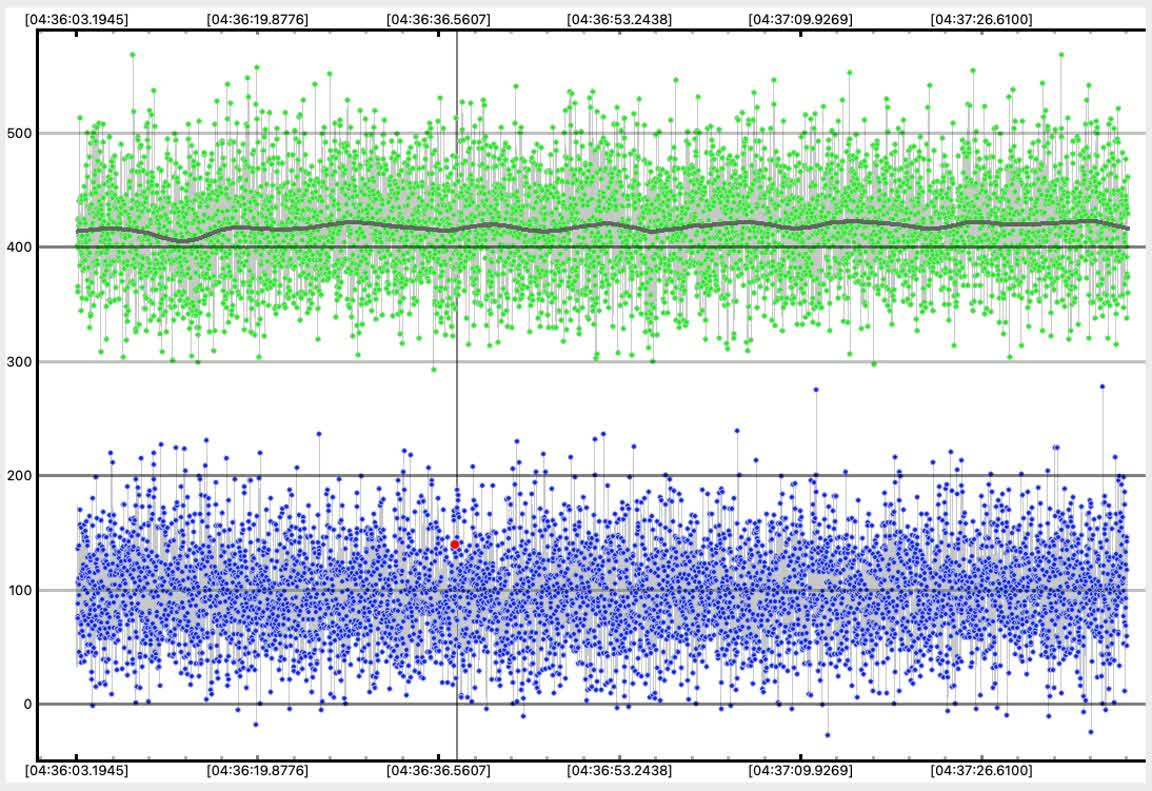
PyMovie raw data shows a noisy event at correct moment. |
I trimmed out the haze-induced drop early in the recording. |
 |
 |
Got a recording from near Delaware St. I don't see an event for 1998 GY3, May 19, 1x at Westlake. PyOTE detectability tool reports an event as short as 0.09s would likely be detectable, max predicted was 0.12s. A miss or too short to detect.
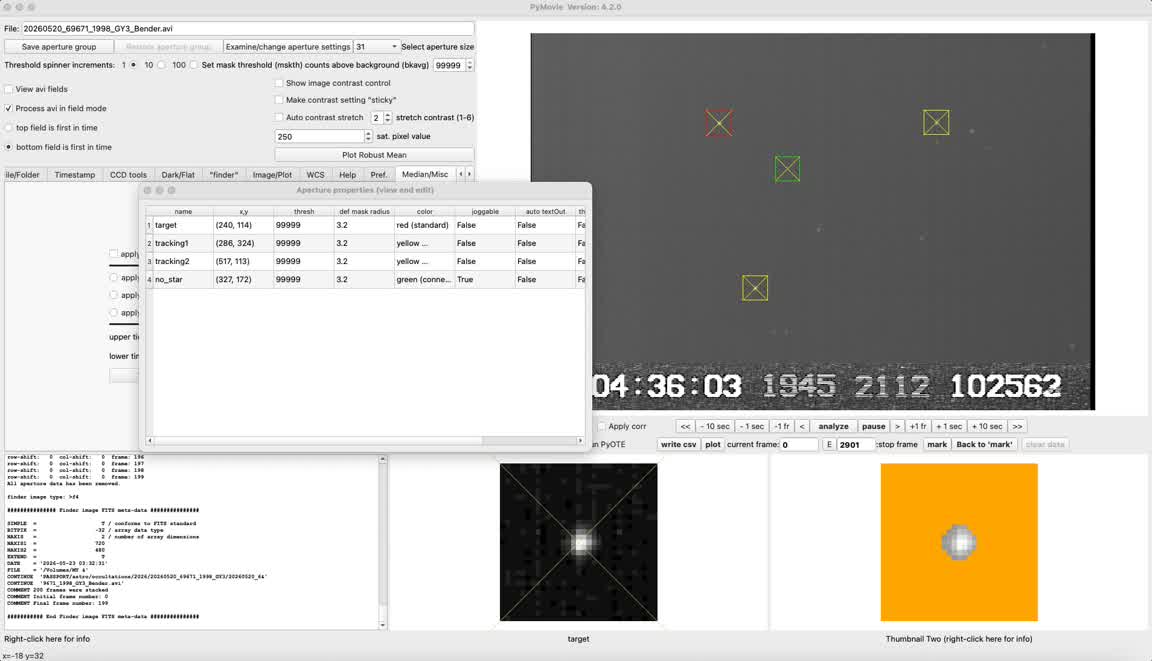
Kirk's screen shot does not show the banding mine shows. It's a bit of a mystery. Some sort of artificial interference in his OccBox set up in mine and not his? |
 |
 |
 |
 |