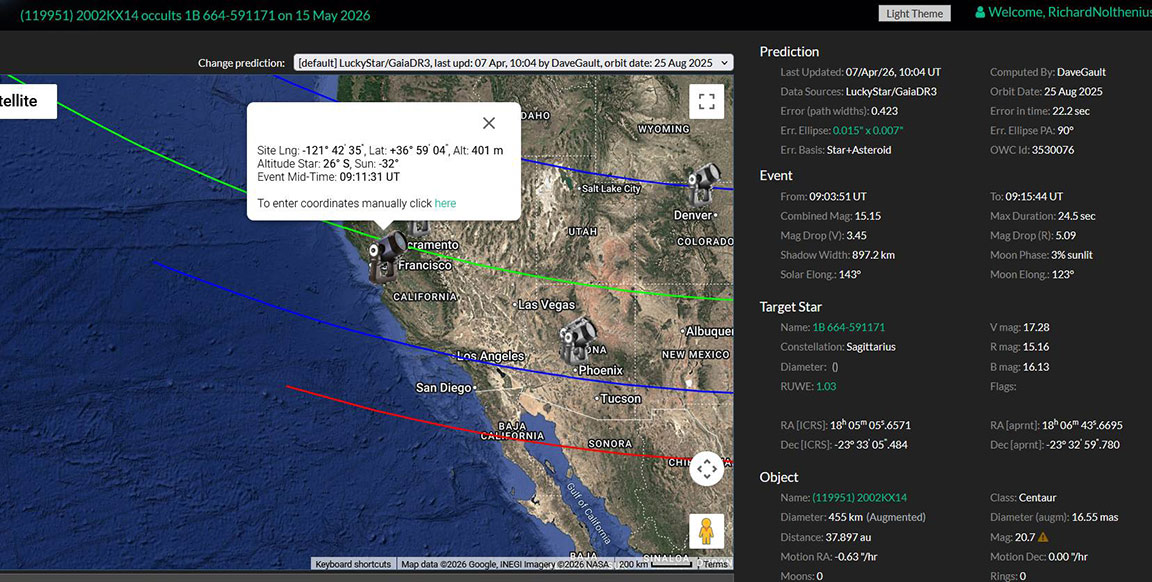
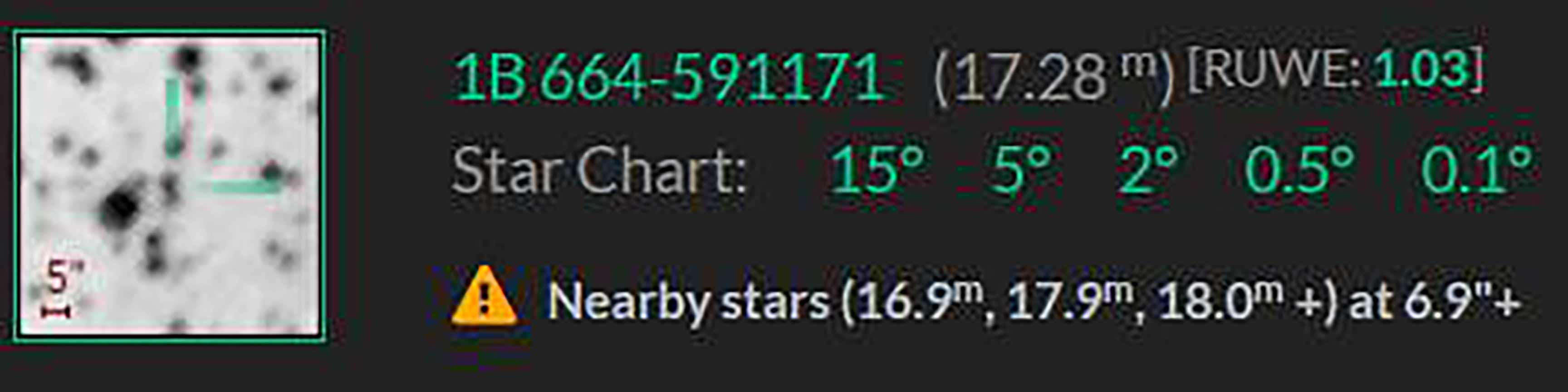
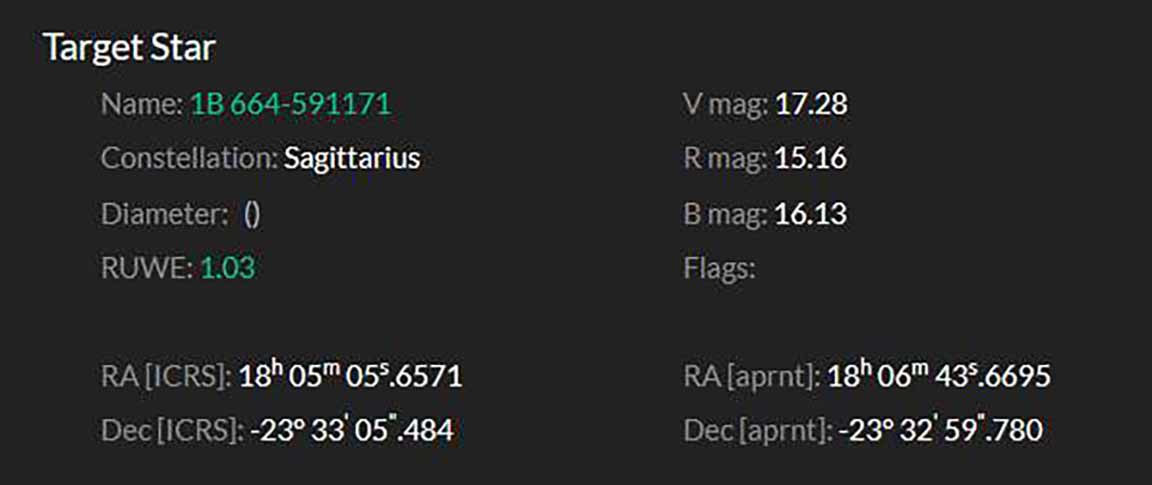
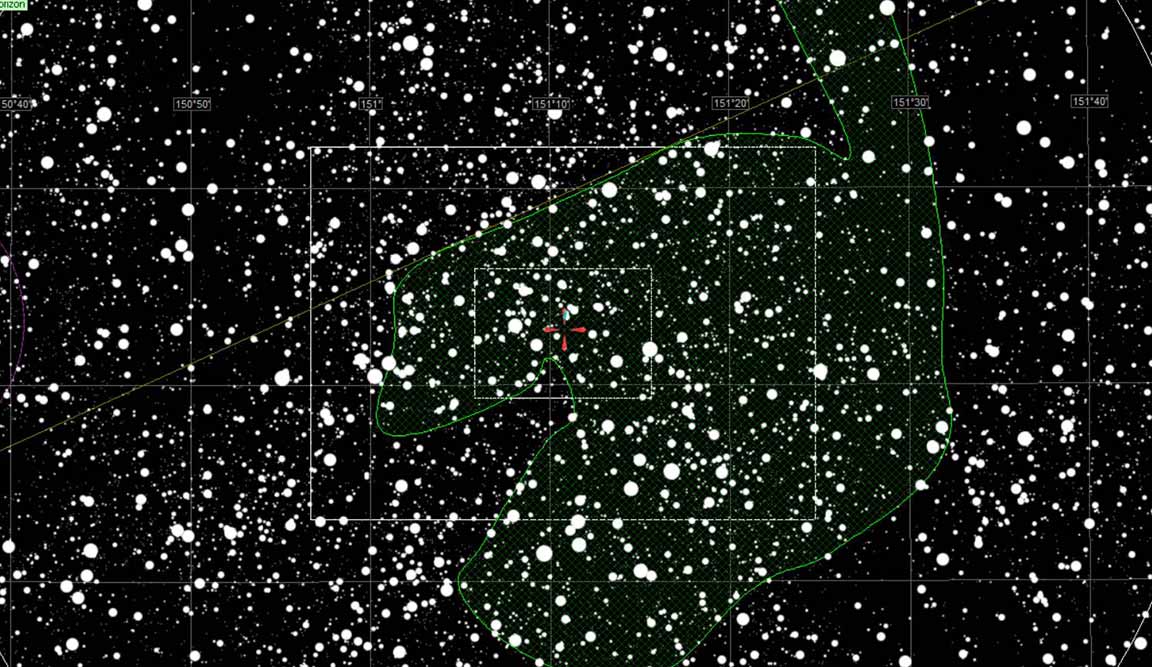
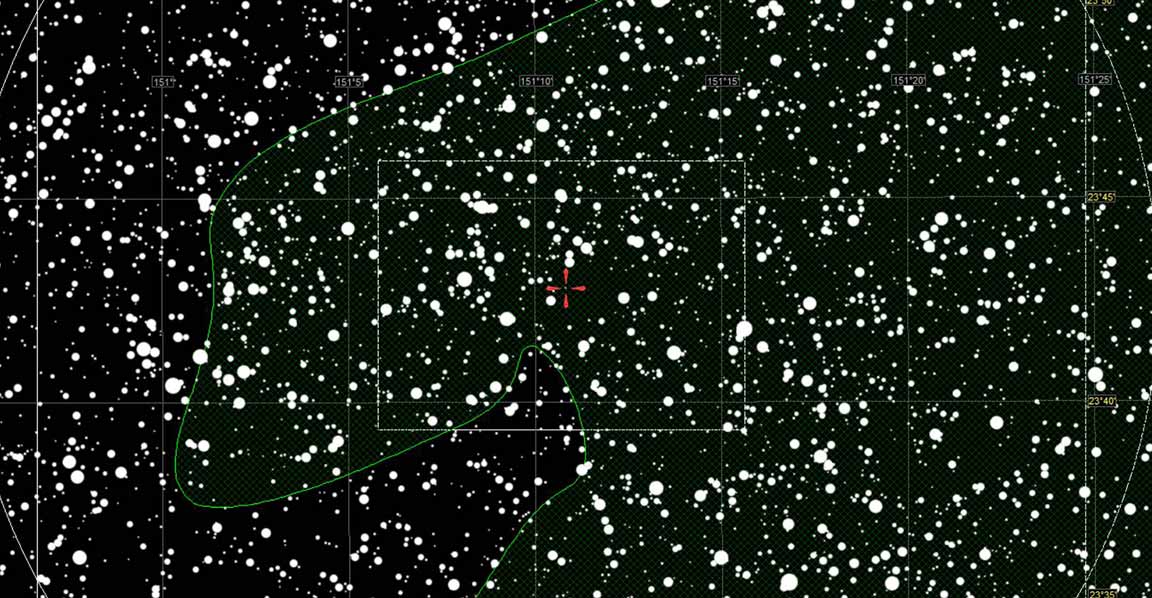
This asteroid is a TNO or Kuiper Belt Object. Its shadow path covers most of California. The path uncertainty seems better than is implied by the uncertainty in the time of the event. The duration is predicted at 23 seconds. The IOTA recommendation and LuckyStar recommendation is that their ephemeris is the most accurate, although in this case the path is about the same for both the JPL and LS, but for LS the time is 2 minutes later. We'll plan based on the LS prediction.
|
|
|
|
|
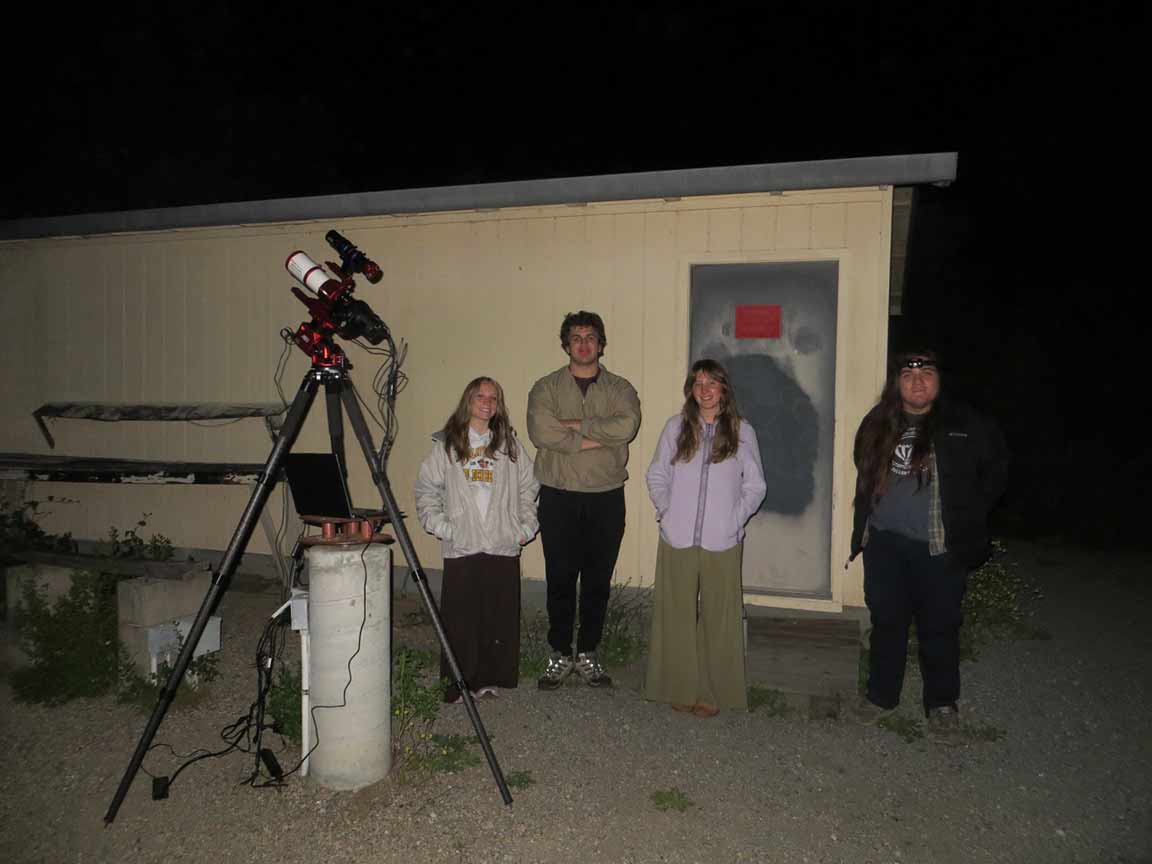
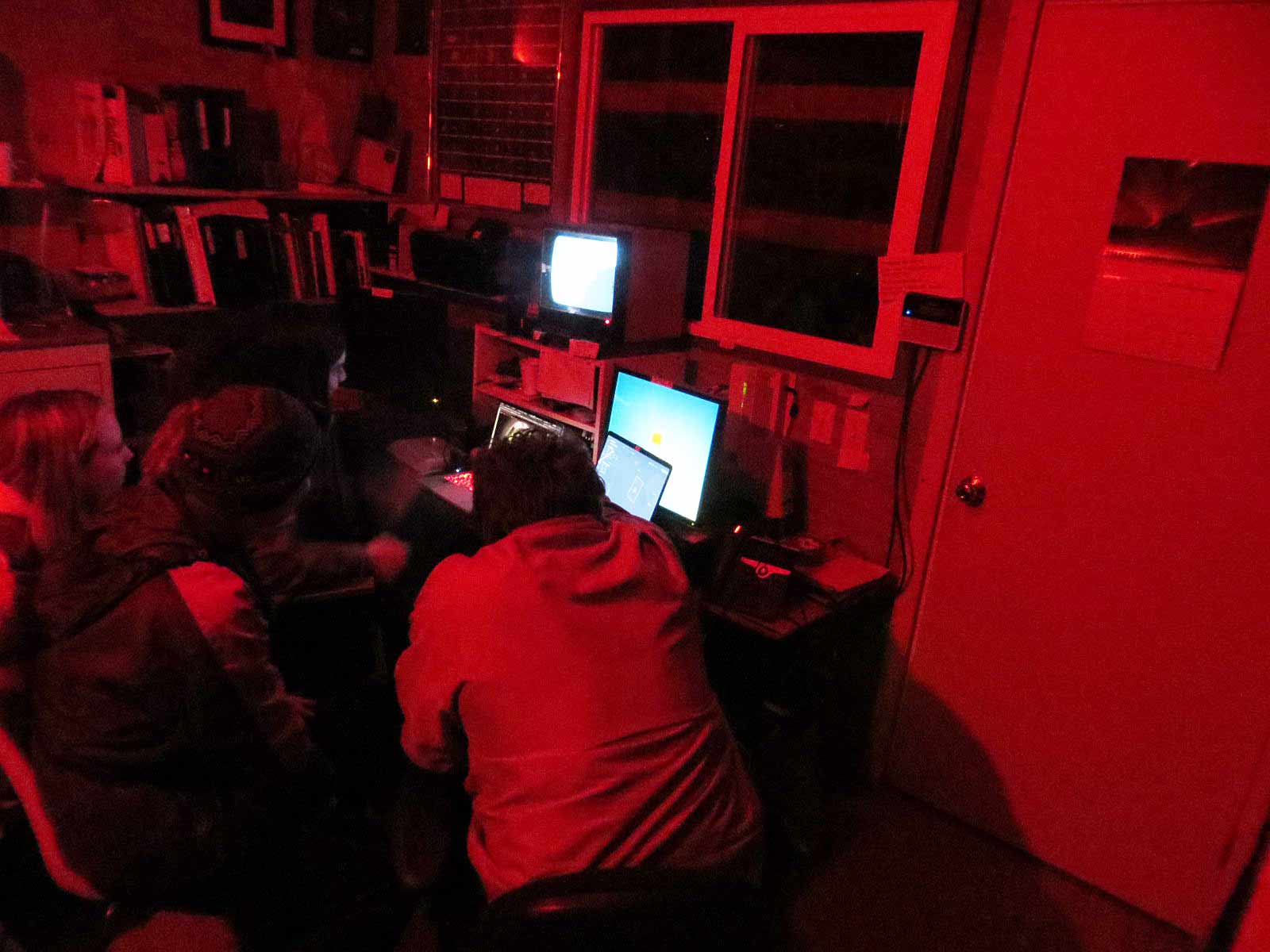
Bernard, Jordan, Sandy, and I, along with a new astro interested student (from Astro 4), Danika, converged at Cabrillo Observatory to try this. Bernard put his Toubtek mono chrome CMOS camera on the 12" with f/6.3 reducer, and we succeeded in ID'ing 16.1 mag stars at 1s integration, and identifying the target star cluster - barely - at 10s integration, but fog rolled in 45 minutes before the event and we got no data.
Our astronomer crew. Jordan, Sandy Danika, Bernard |
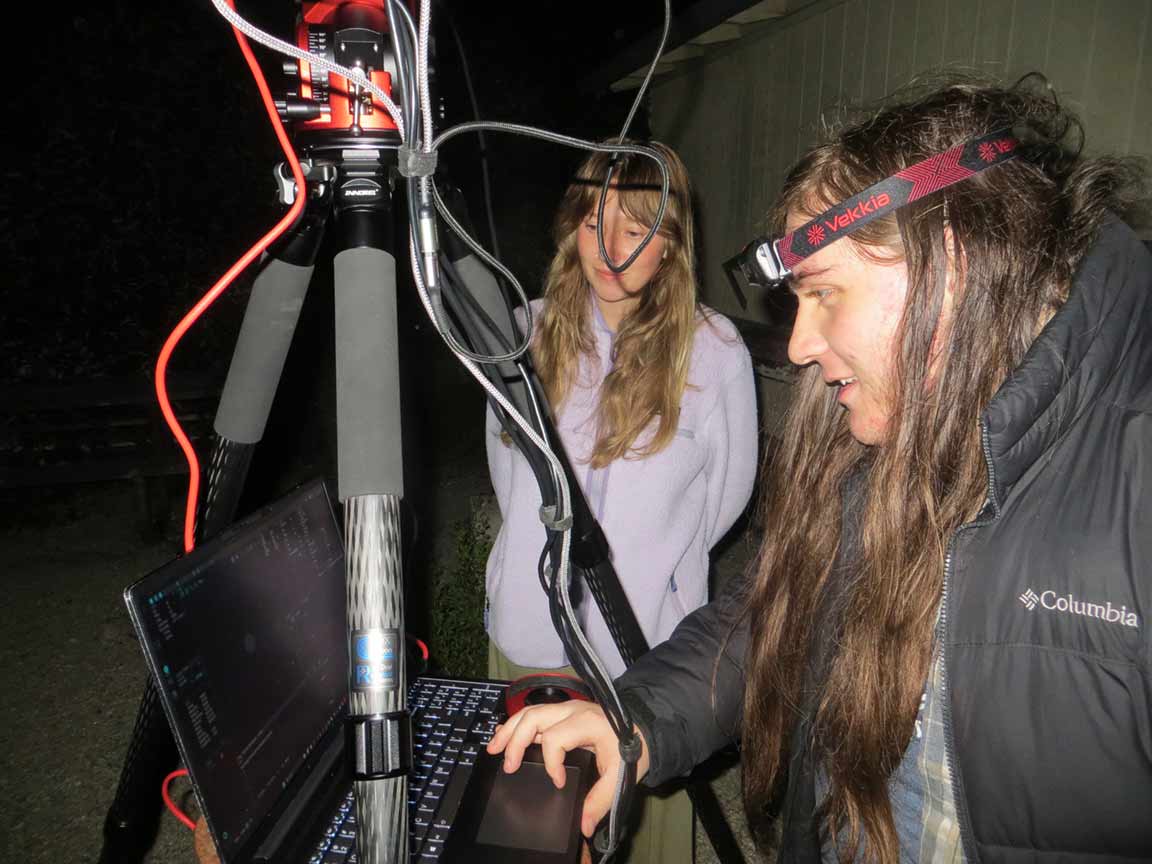
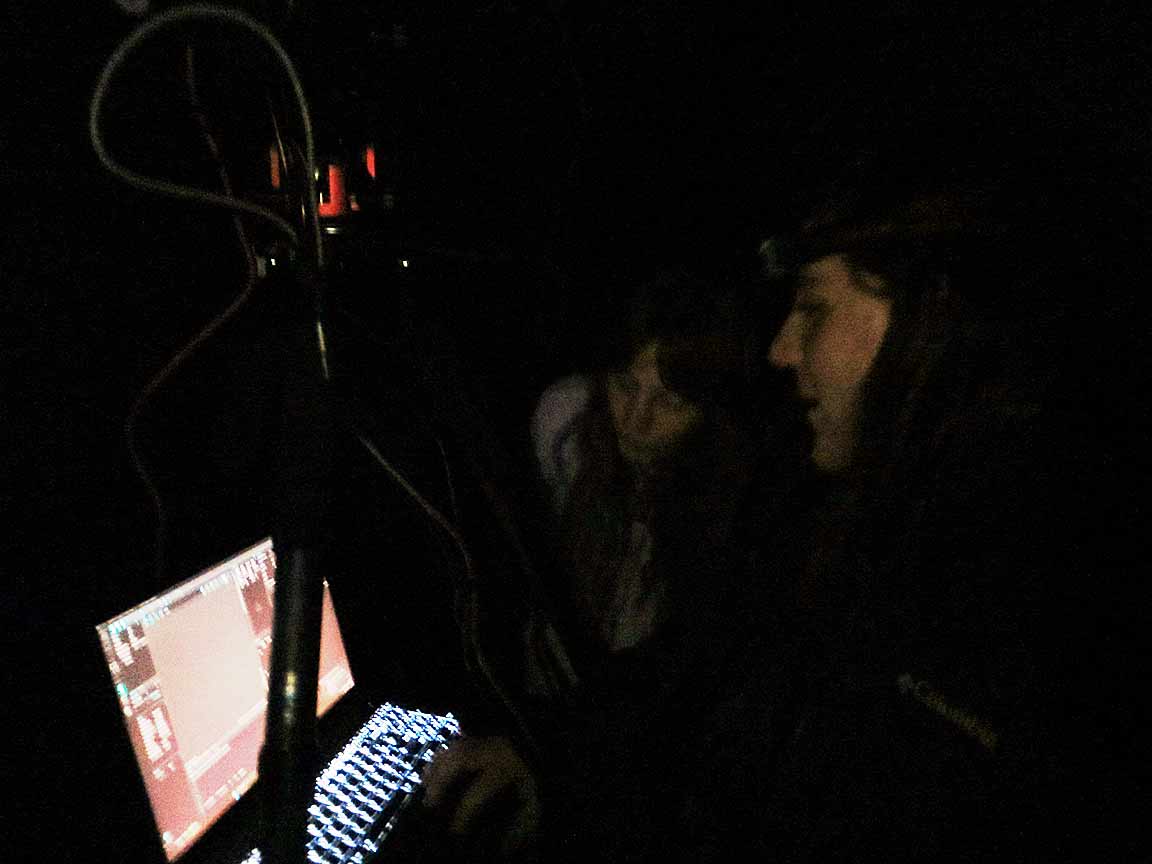
Bernard and Danika, on the laptop and Nina, controlling our AM3 mount and ZWO camera |
 |
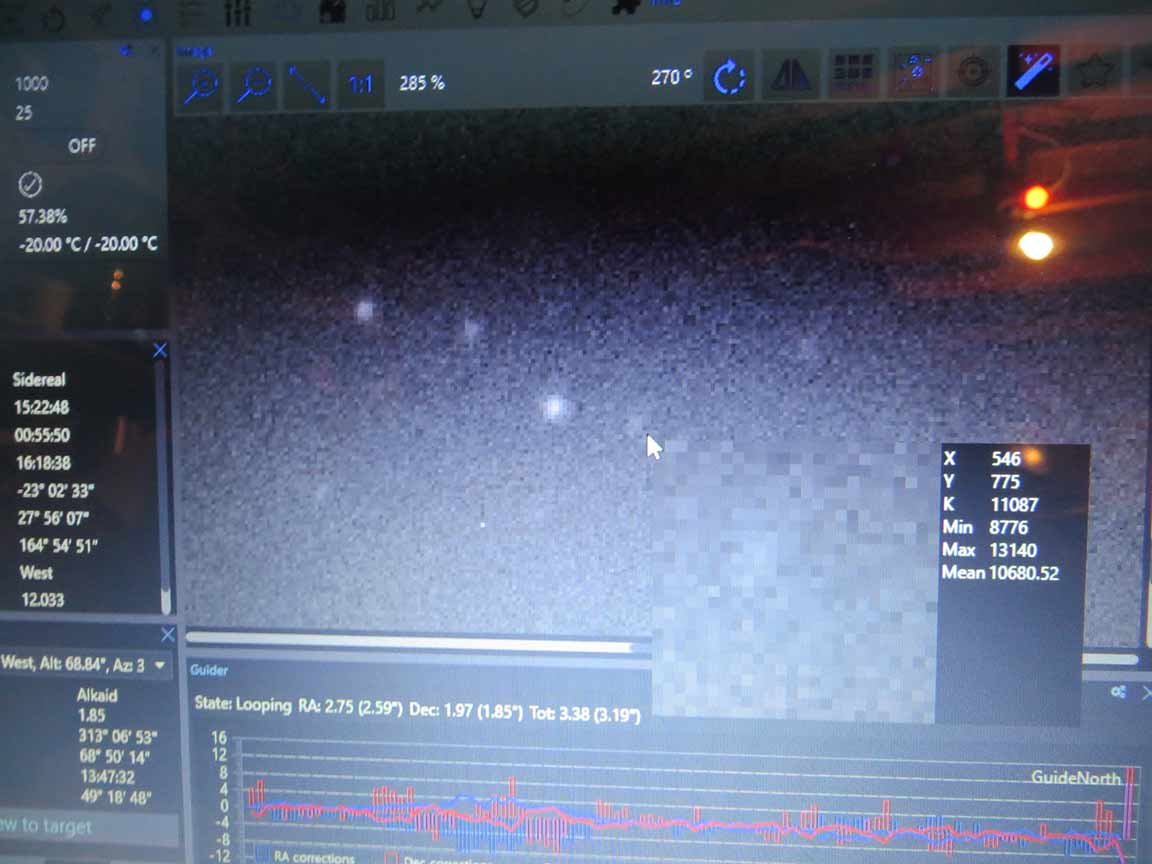
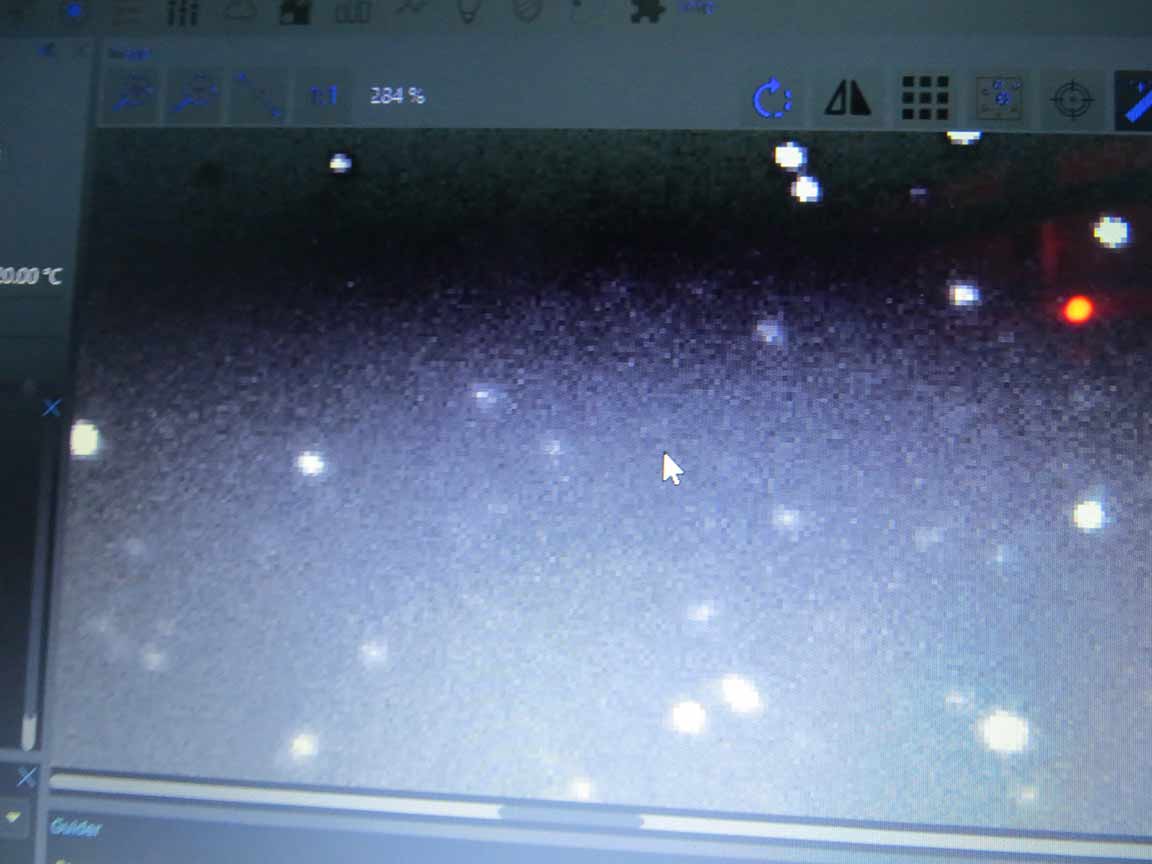
On the 12", we mounted Bernard's monochrome camera and tried long exposures and high binning to see if we had a chance at the W=16.9 target star. The arrow points to a 16.1 magnitude star, at same altitude and azimuth as the target would be at event time. |
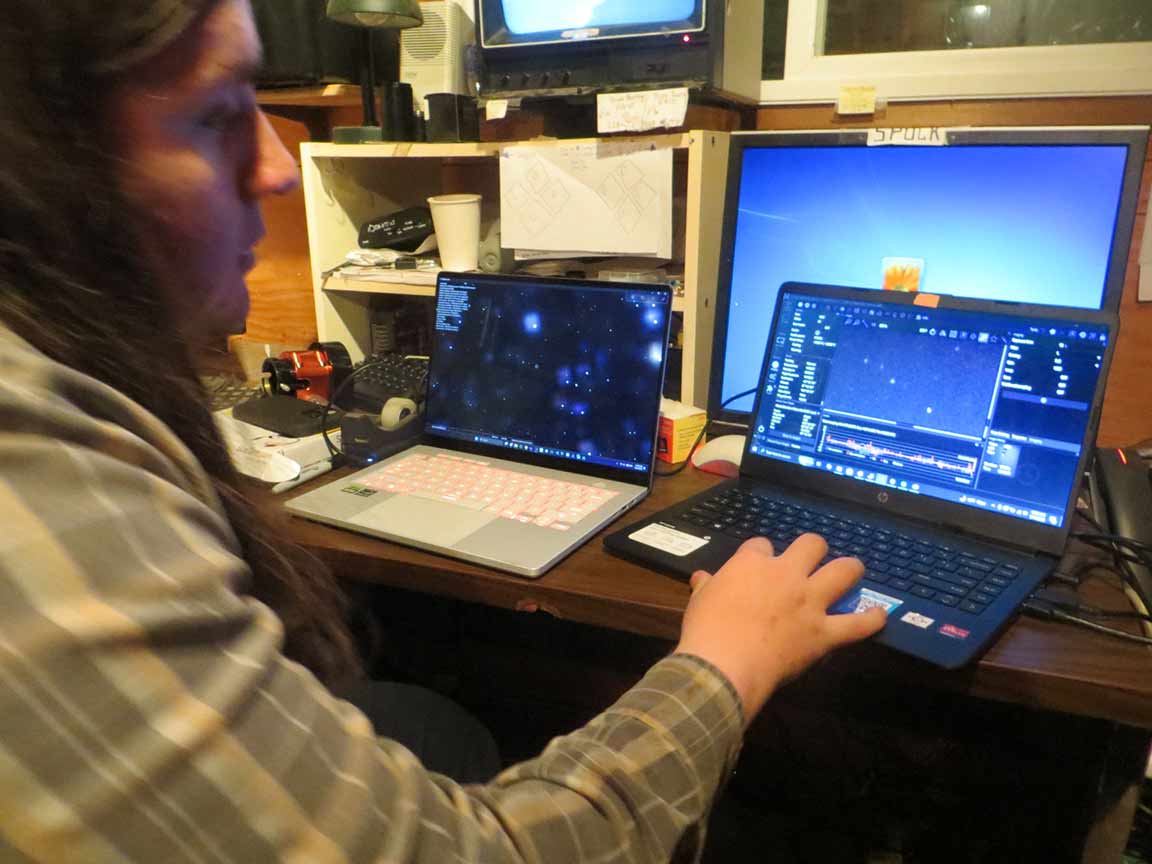
Bernard, at the controls |
About 50 minutes before the event, we're on target, ID'ing the star field |
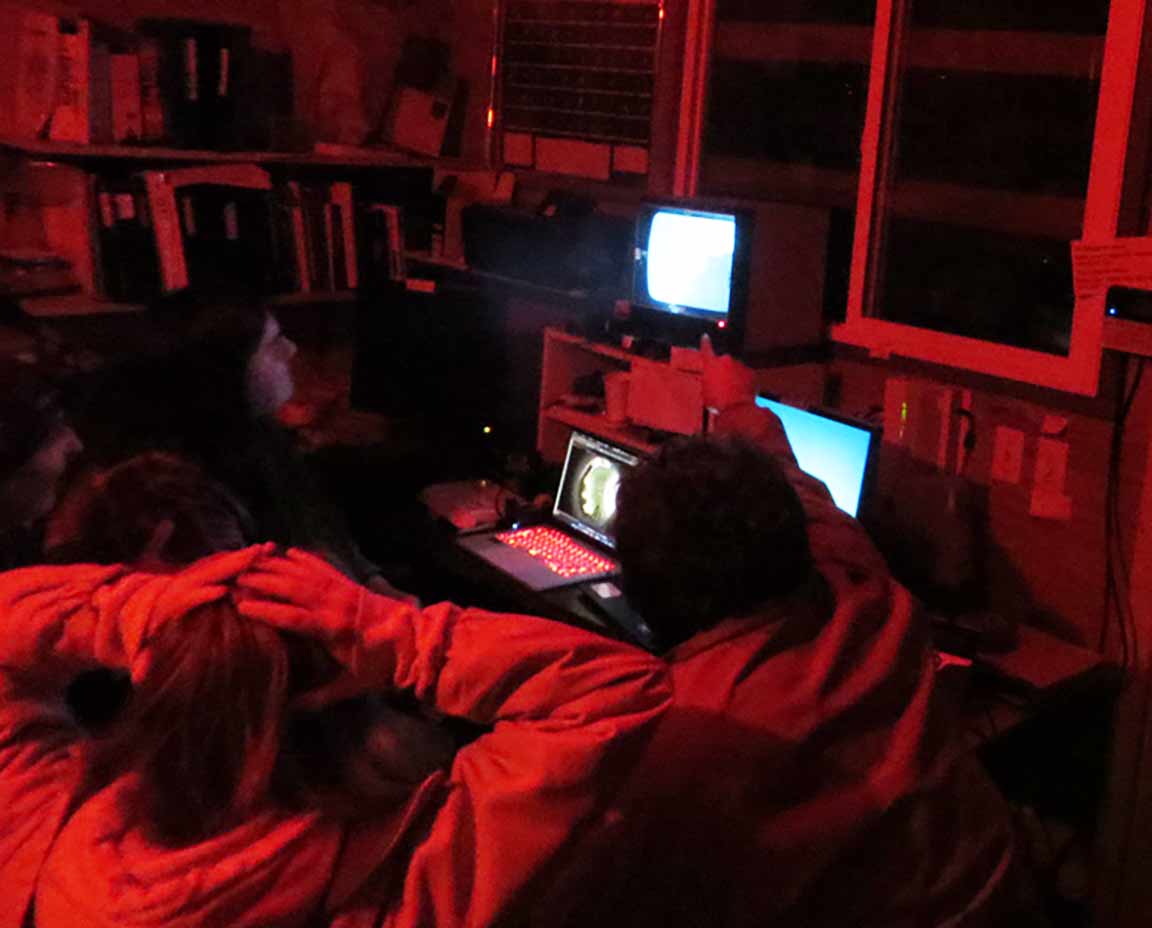
Then, Bernard remote accesses his telescope in north Santa Cruz, and sees clouds. Jordan is holding her head.... OhNooooooooooooo! |
The arrow points to a faint blob that is the target star and its nearby neighbors, at 10s exposure, 4x4 binning. It's just barely visible, and given its combination with the neighbors, would be very hard to see a 23s occultation. As it turned out, the fog came in and so we got no data. |